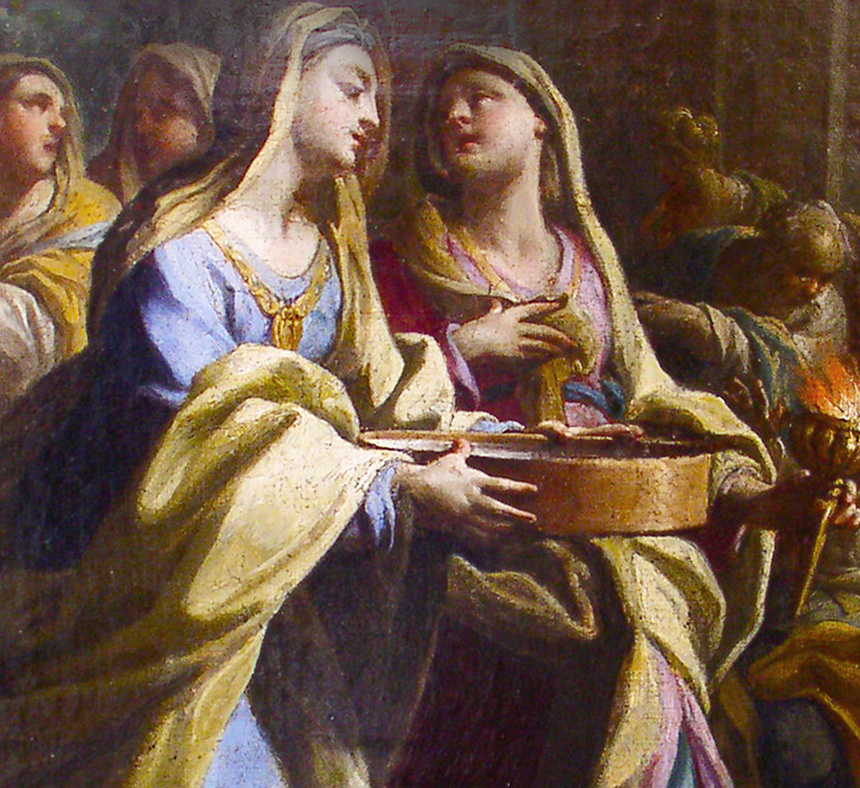
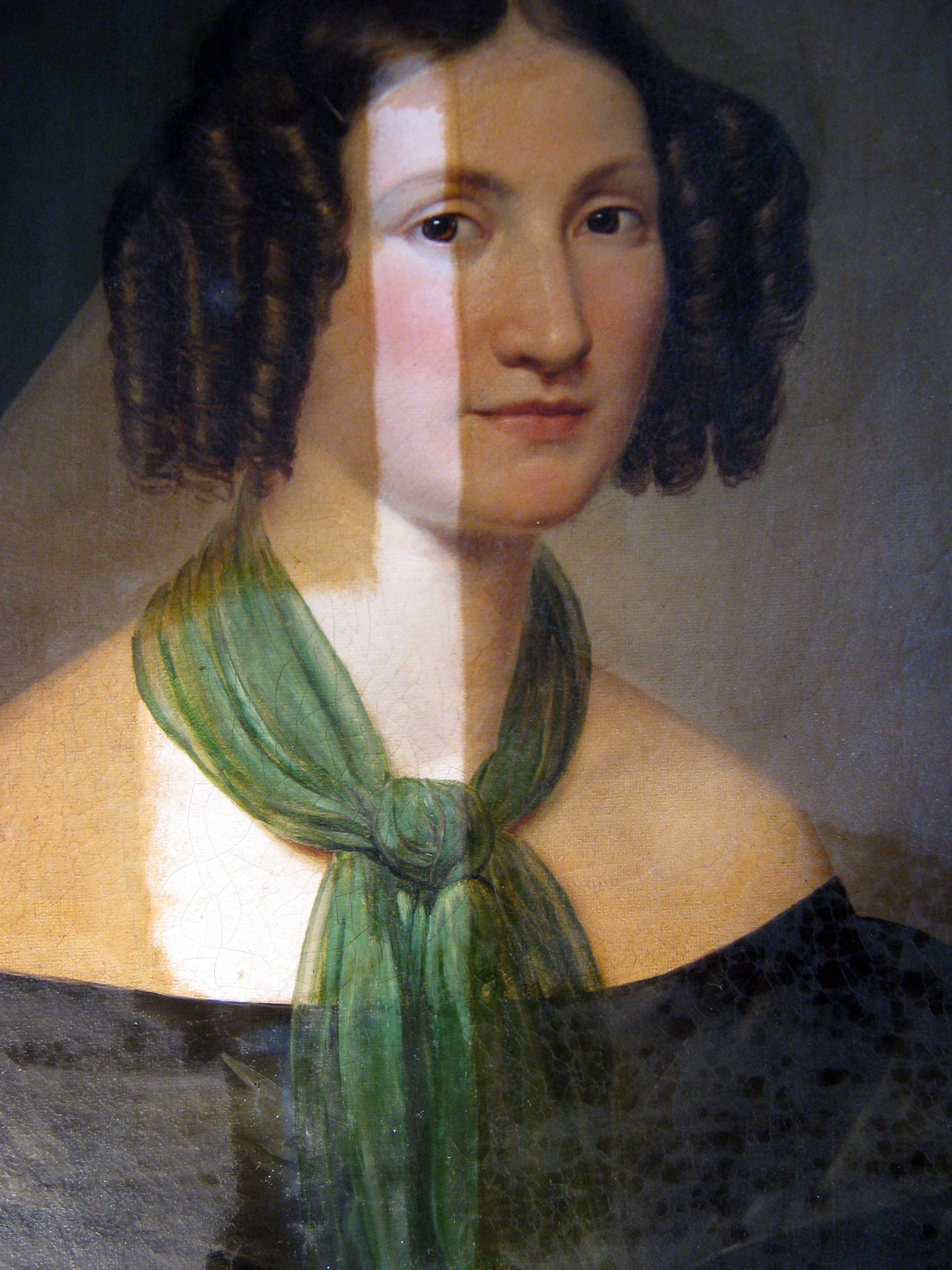
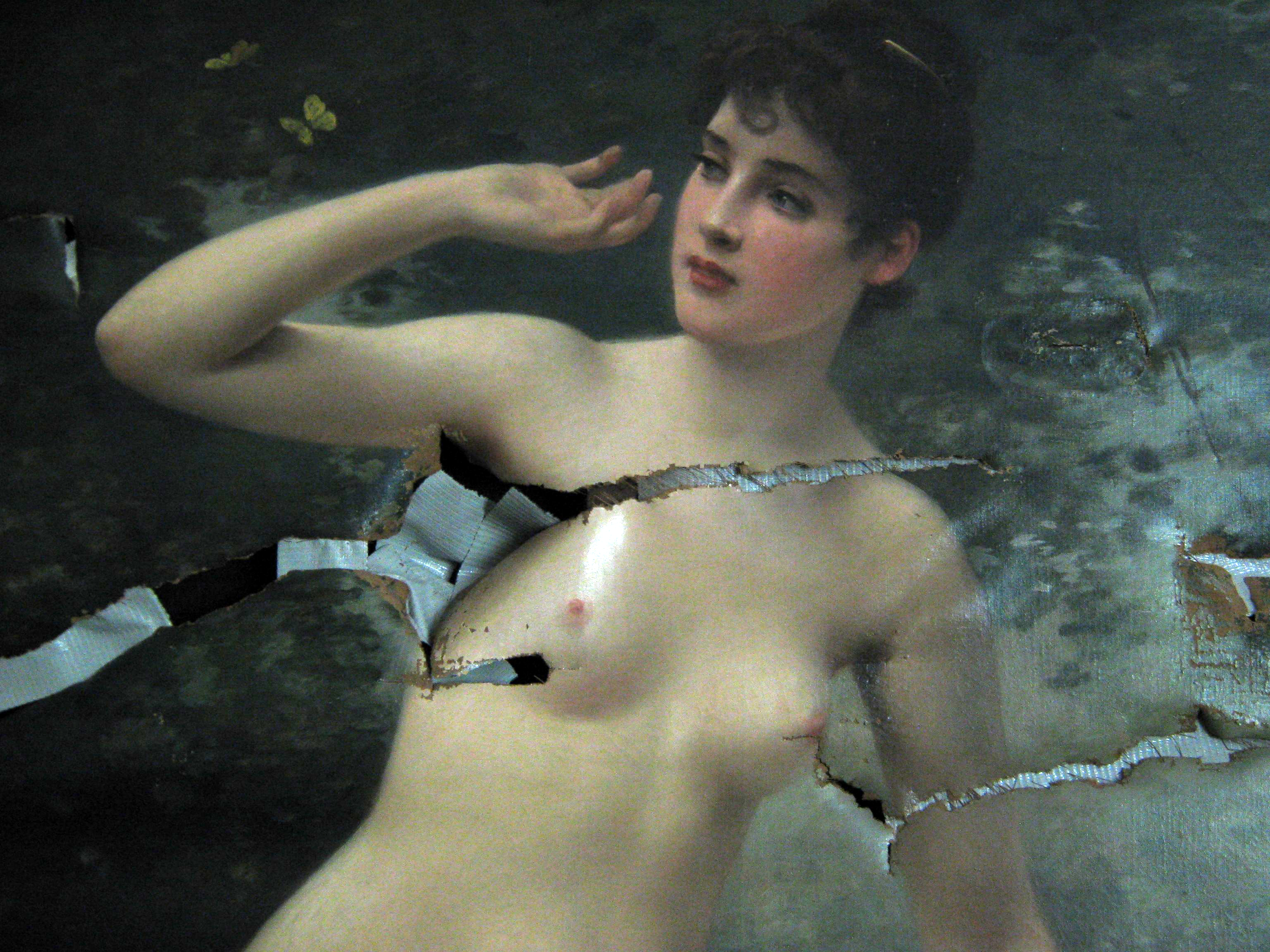
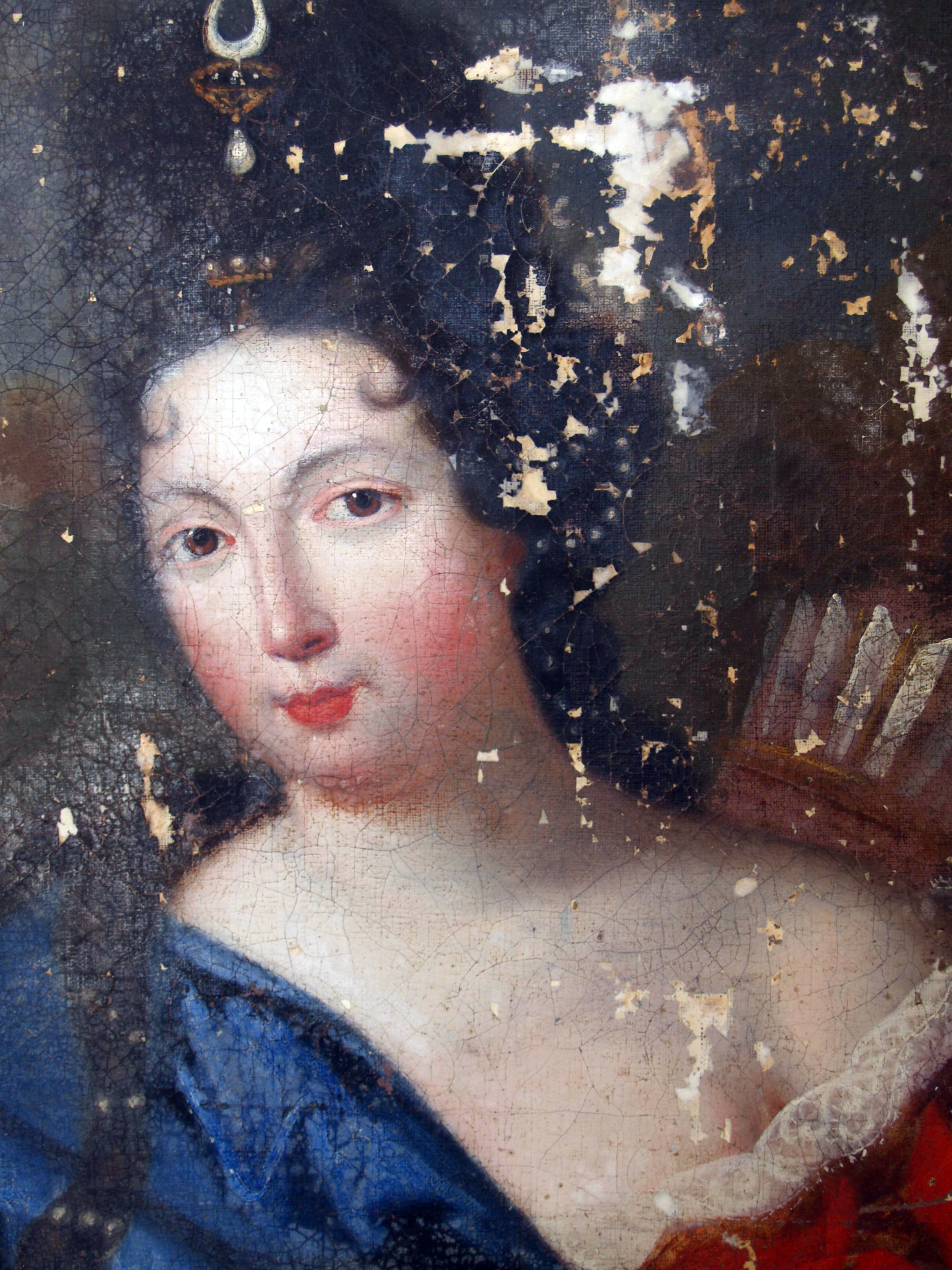
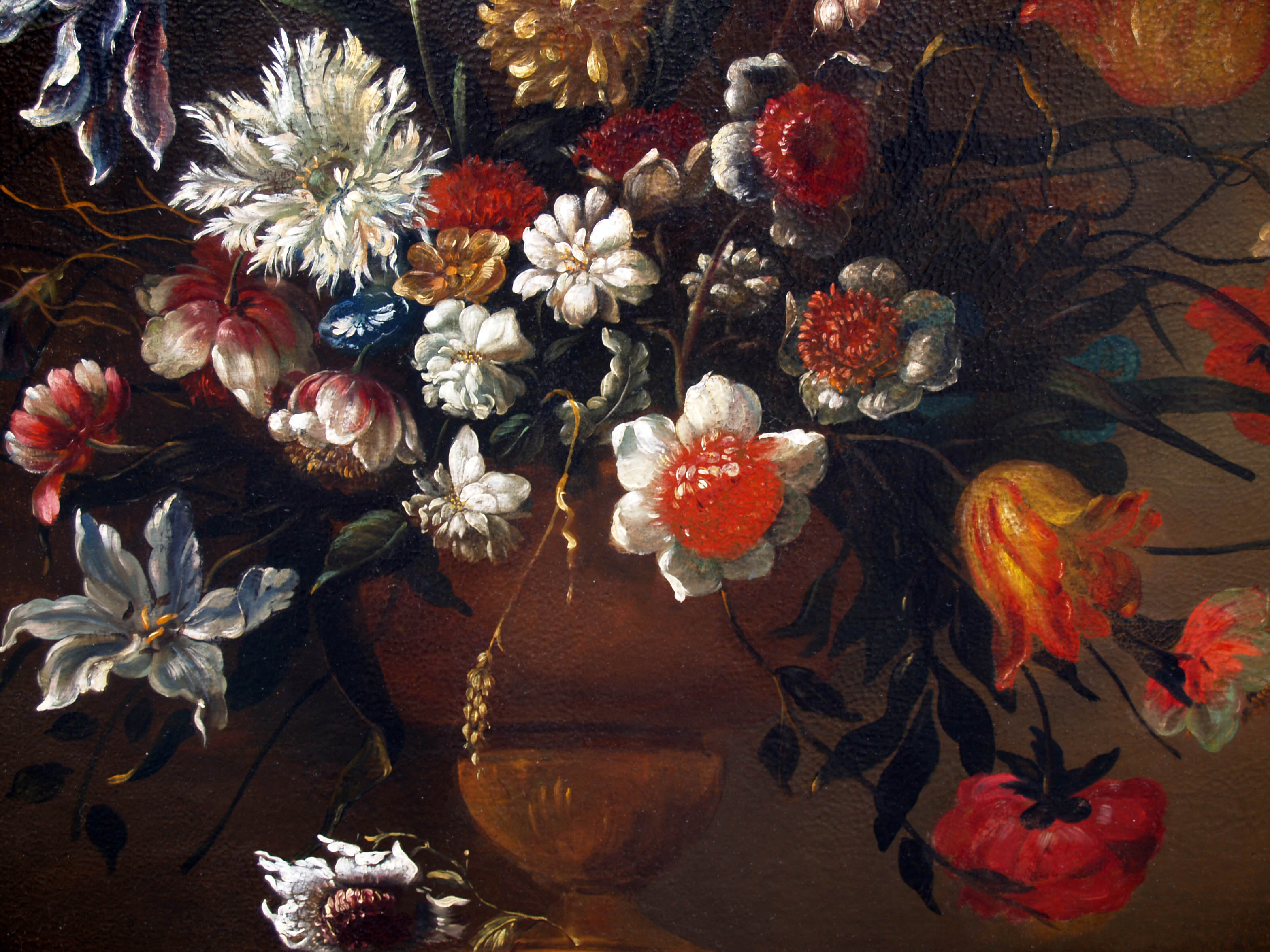
“Time is the worst enemy of art.” Although a misquote of Orson Welles’, it could be the motto of this profession. All paintings change and deteriorate with age. Accidents happen, natural elements take their effect. And even if the artwork lived a good, safe life, the natural aging process takes place; varnishes oxidize and turn yellow, dirt and grime accumulates on the surface, and the visual impact and stability of the painting slowly deteriorates.
Understanding the range and cause of damage to a painting and recommending the best treatment requires knowledge and experience. Good art conservators are artists trained in chemistry, art history, and material science; they are crafty, patient, and always apprehensive of the treatment going wrong.
Choosing an experienced art conservator, if you are looking for one, is crucial. Almost every older painting has been restored at least once before. It is a sad and ironic truth that many times, the most damage to a painting is caused by the mistakes of an inept previous restorer. Until relatively recently, the task of restoring paintings was entrusted to local artists. There were no schools to teach it. Some attempts at restoration cause irreversible damage, and now we can only lament and imagine such painting in its former glory.
It is important to remember that improper restoration can affect the value of a painting negatively, and that many times previous restoration damage cannot be fully corrected.
In our work, we follow a strict code of ethics. Every painting is treated with the utmost care and respect, and all treatments are fully reversible, documented, and done with great consideration for the artist's intentions. See for yourselves.
About Me
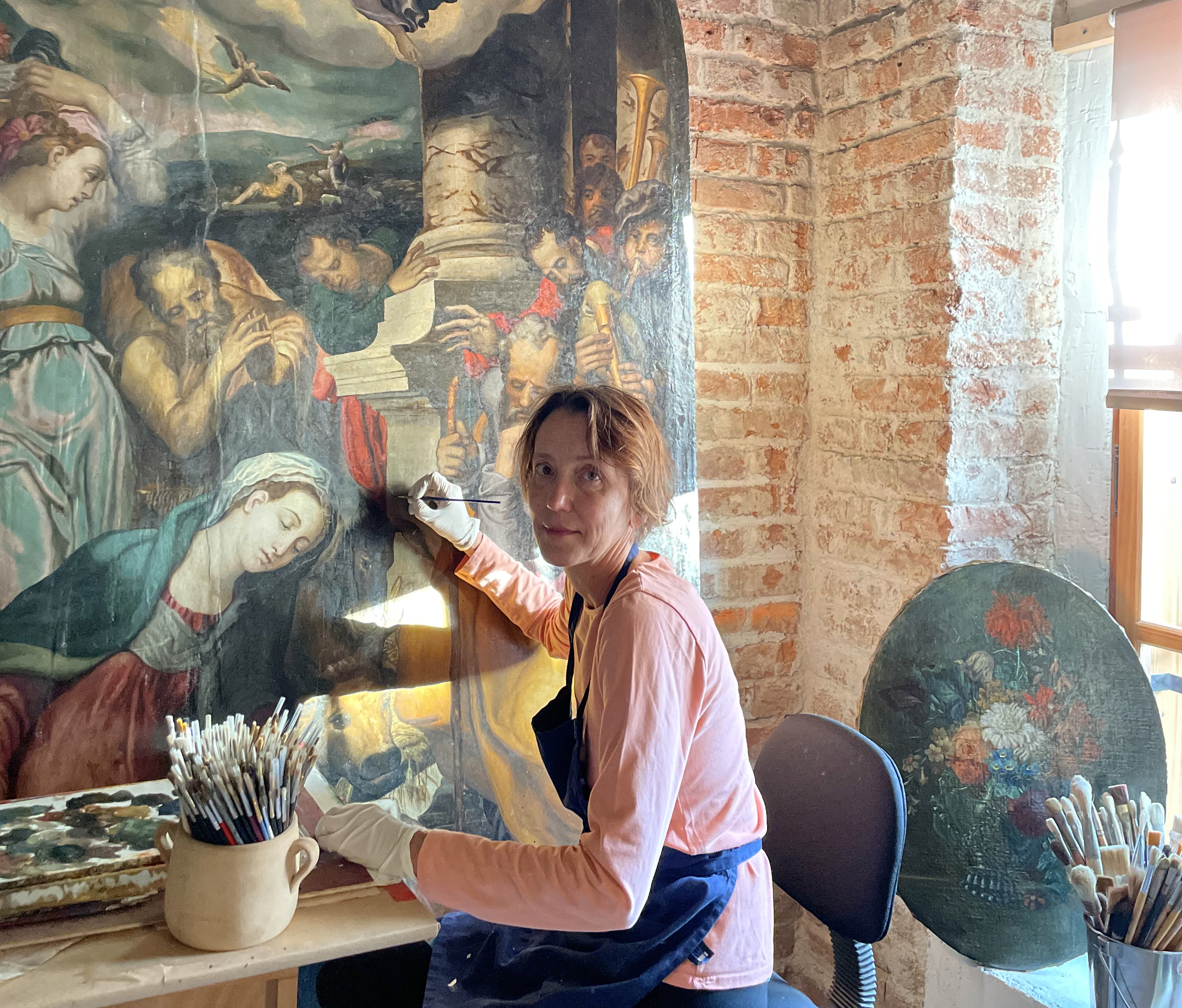
Katja Grauman, owner of Fine Art Restoration, LLC.
I have been a conservator of easel paintings in private practice for almost thirty years. My clients range from well-known galleries, large private collectors, art dealers, and small museums to regular people whose grandmothers’ paintings were damaged during a move.
My path to conservation has not been a straight one; resulting not from my own indecision, but from the political situation in socialist Czechoslovakia, the country of my birth. At the time, only a few chosen students with “protektsia”; mostly children of the elite, were allowed to attend the prestigious Academy of the Arts. As a child of intellectuals, I didn’t qualify, and despite my passion and talent, I was only allowed to study art in high school. My life had to take a few interesting but difficult turns and one regime change before I could find my way into this unique profession.
Growing up, I witnessed great disregard for my national cultural heritage by the over-zealous bureaucrats who believed that the symbols of the past must be replaced by the simple grey uniformity of the new era. Old castles, historical buildings, churches, and synagogues were left to deteriorate, and religious paintings of lesser importance were discarded. The largest synagogue in my city was converted into a ballroom, its extensive murals plastered over.
As a high school student studying art conservation, I fell in love with abandoned, mildewy paintings barely surviving in wet castes. Saving such paintings and helping others to prevent destruction became my dream, and although I was unable to study art conservation at university because of my political situation, I was determined to make it my profession.
Years of study, extensive training, and the experience gained from eventually coming to America and taking an apprenticeship made that dream possible.
Services
Art restoration and conservation
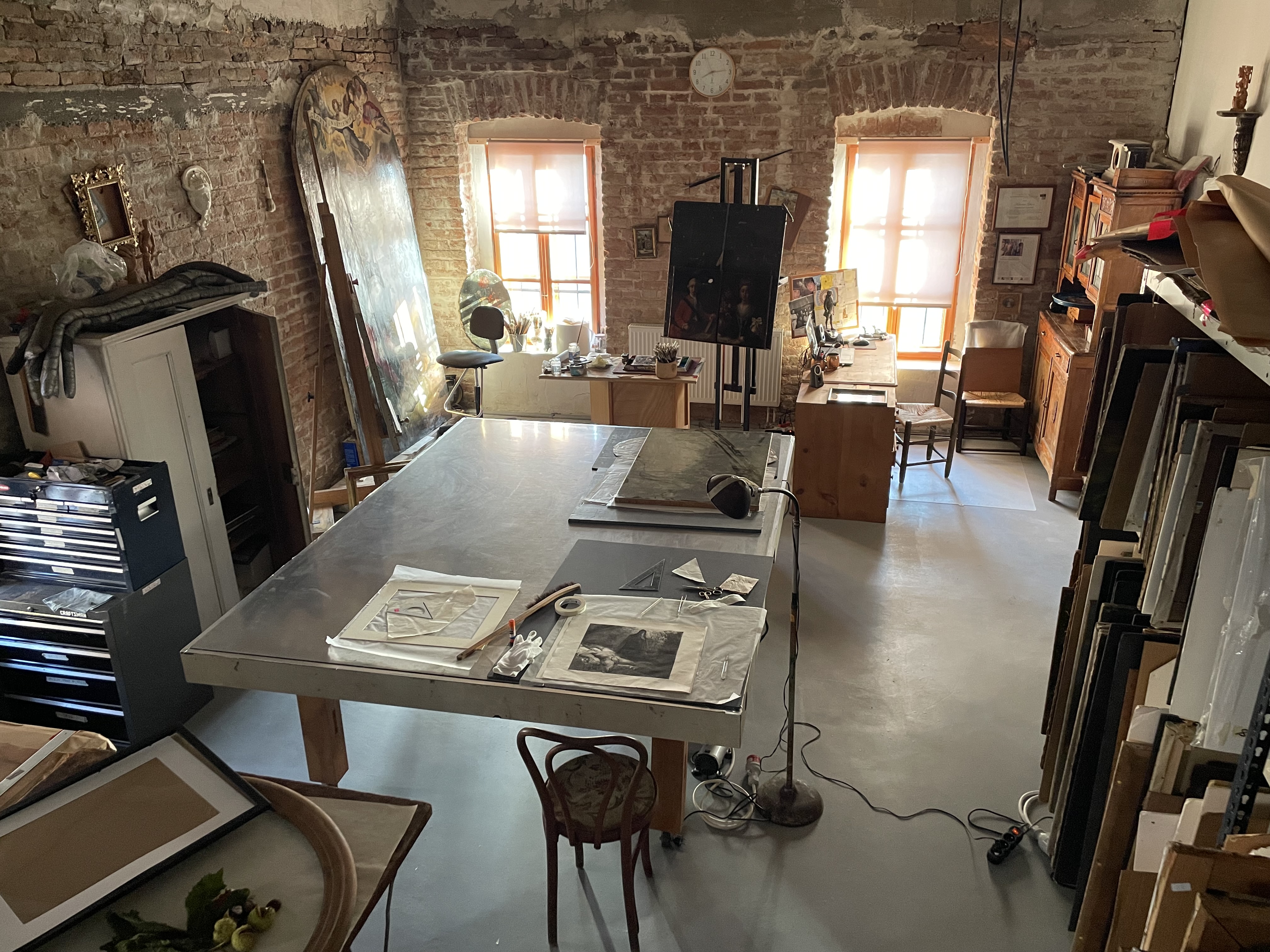
Although in many cases a preliminary painting assessment can be done from high-quality detailed photographs over email, the best way to have a painting examined is to bring it to the studio. Here, the painting is safely removed from its frame and its condition is thoroughly assessed. The assessment can take anywhere from twenty minutes to an hour, depending on the complexity of the work.
Any treatment that the painting needs will be clearly explained. The cost of restoration is determined and agreed-upon in advance. A written document outlining the condition of the painting and proposed treatment is issued for each painting left in our care.
Artist research
Many paintings are not signed, or the artist’s signature is either difficult to read or has been damaged. A little bit of detective work and cross-referencing with all available sources can often lead to deciphering the artist. When the artist's name is known, a great deal of information can be found out about previous sales, valuation of the paintings, and more.
Pre-buying consultation
Are you considering buying a painting, but are unsure about its condition? Does it look too good to be true? Is it a painting or a print? Has it been restored in the past? If so, to what degree? How much would a full restoration add to the overall value of your painting? Is the signature legitimate?
We can help you answer these questions, free of cost.
Collection evaluation
A complex, comprehensive look at a collection of artworks to determine possible issues and help with general maintenance.
♣ Are the paintings properly displayed?
♣ Do some of the paintings need a fresh coat of varnish or a gentle dusting?
♣ Assessment of condition for each painting
♣ Written documentation and cataloguing of each painting
Examination of the painting's condition
A knowledgeable look at the painting through the eyes of a restorer/conservator. The overall condition of the painting is thoroughly evaluated and, if needed, restoration treatment is suggested.
On-site examination and treatment
Some paintings are either too large or too heavy to be easily transferred to the studio. In such cases, the evaluation of the condition and sometimes even some restoration work can be performed on premises.
Common Procedures
1. Cleaning
Removing old varnish and surface imperfections. This process deals with only the topmost layer of the painting. The most common issues with a painting are either dysfunctional and yellowed varnish or the accumulation of dirt and grime on the surface. Most of the time, both can be removed safely.
2. Tears, Punctures
Small tears and punctures in the painting’s canvas are mended by patching or careful gluing of the fibers back together with the added reinforcement of new threads. The missing paint is in-filled with gesso and in-painted with pigments dissolved in Acryloid B-72.
3. Lining and Striplining
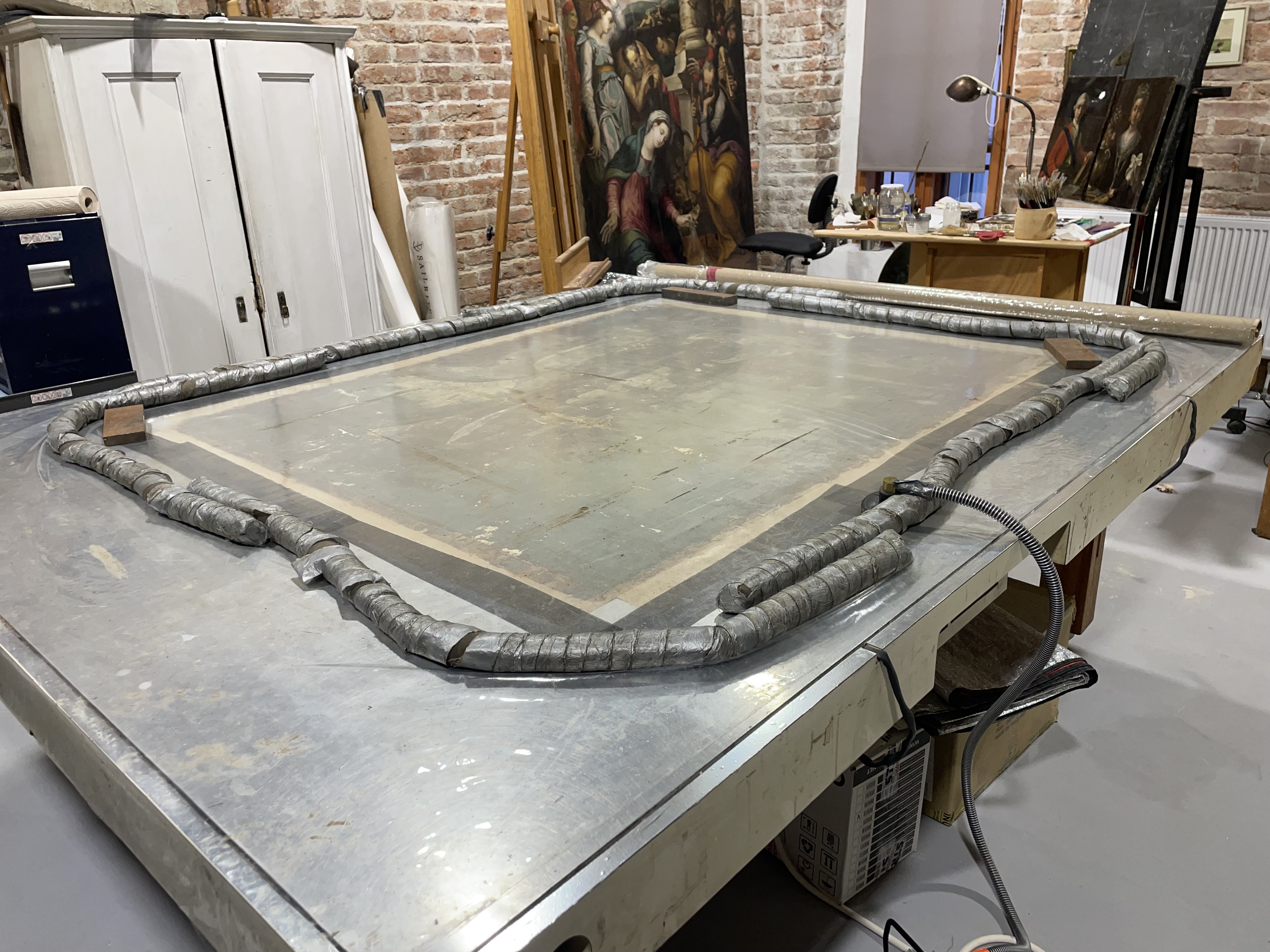
If the stability of a painting has been compromised (by a large tear, for example) a new support is needed to hold the painting together. The original painting is removed from its stretcher and attached to a new piece of fabric using an appropriate choice of adhesive. This process is performed on a vacuum hot table.
In some cases, the tacking edges of a painting are too weak and fragile to bear the tension of stretching, and here thin strips of new canvas are glued around the sides of the painting as a reinforcement.
4. In-filling and In-painting
Areas of missing, flaked-off paint are in-filled with gesso first, "texturized" to match the thread pattern of the adjacent area and then in-painted carefully with pigments dissolved in Acryloid B-72.
5. Humidity Treatment and Paint Stabilization
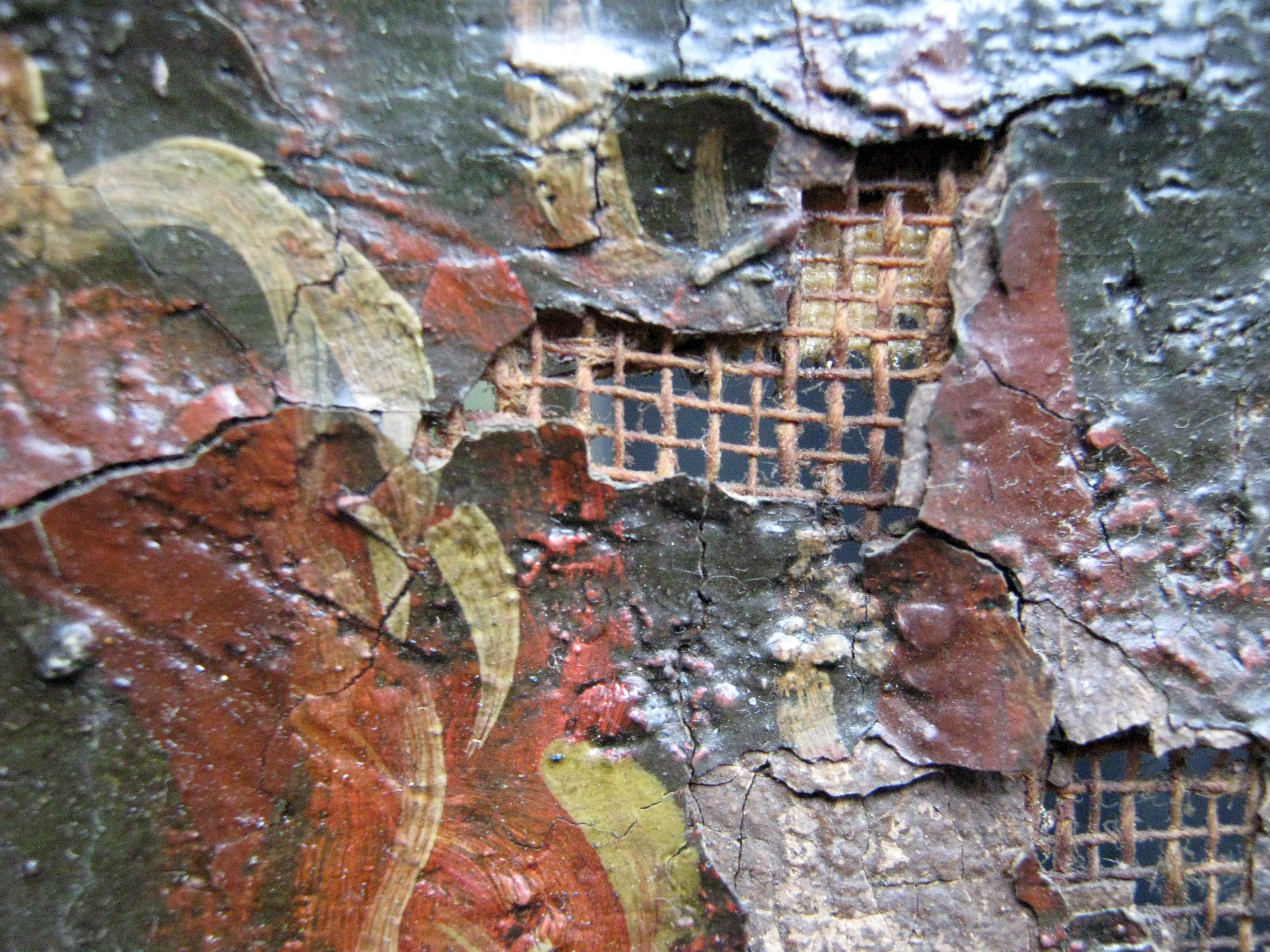
Rapid changes in relative humidity, improper storage, or extreme temperature fluctuations can cause serious damage to a painting. The canvas stretches and contracts, the paint layer cracks, lifts, and flakes off. The canvas sags and becomes loose or undulated. In most cases, proper humidity treatment will bring a painting back to plane. Flaking paint can be successfully stabilized and carefully re-adhered.
6. Varnishing
Varnish, like a good sunscreen, protects a painting from the environment, UV light, pollution and dust. It should be fully removable and applied correctly to bring a painting to life.
Gallery of Finished Projects
Each painting coming to our studio presents its own story. It bears touches of previous owners (good and bad), tells us about the environments it was kept in, the wars and epoch changes it survived, and it also reflects on changes in tastes over time. To understand the condition of the painting is a discovery, sometimes full of surprises. An extensive knowledge of art history, as well as the instinctual know-how that only comes from experience, are both equally important qualities in a good art conservator. Together with all the other expected skills, like decent artistic talent, a deep knowledge of chemistry, and a willingness to accept that rusty nails will find a way to jab the fingers no matter how careful one is.
We research paintings in our care carefully and consult with the client throughout the process. Still, many times the before and after restoration differences are substantial. No matter how many times, seeing how a properly restored painting comes to life is breathtaking.
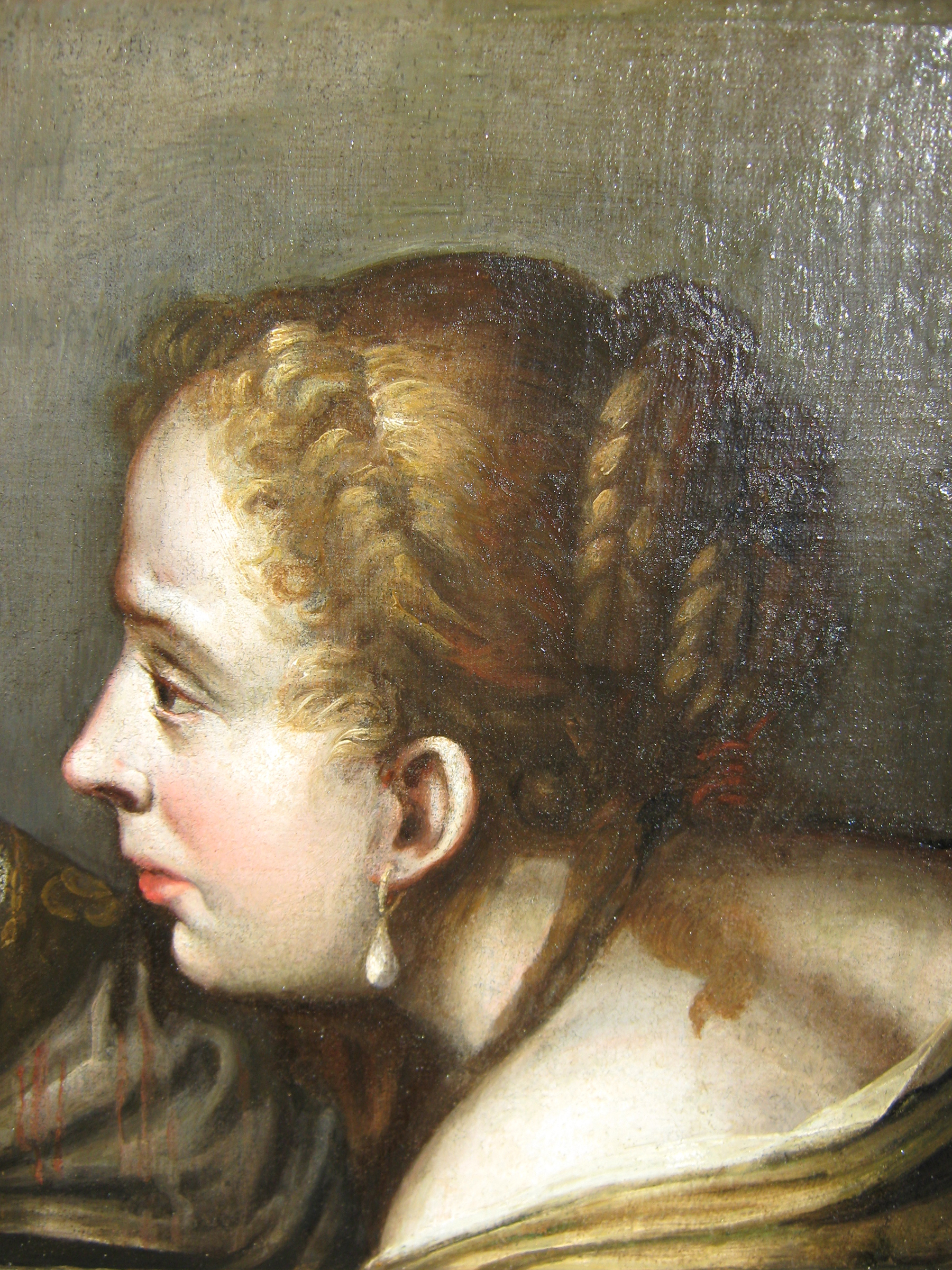
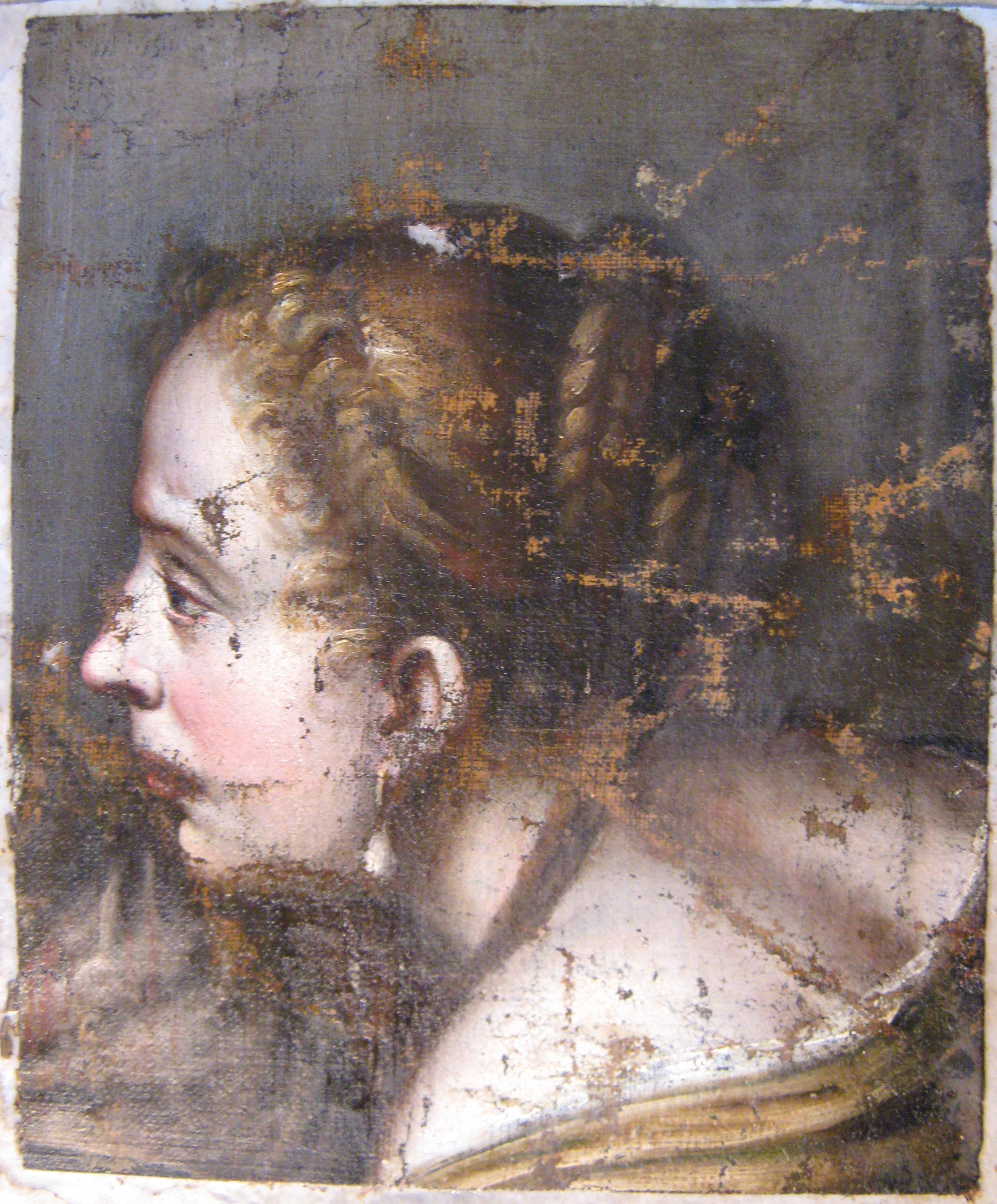
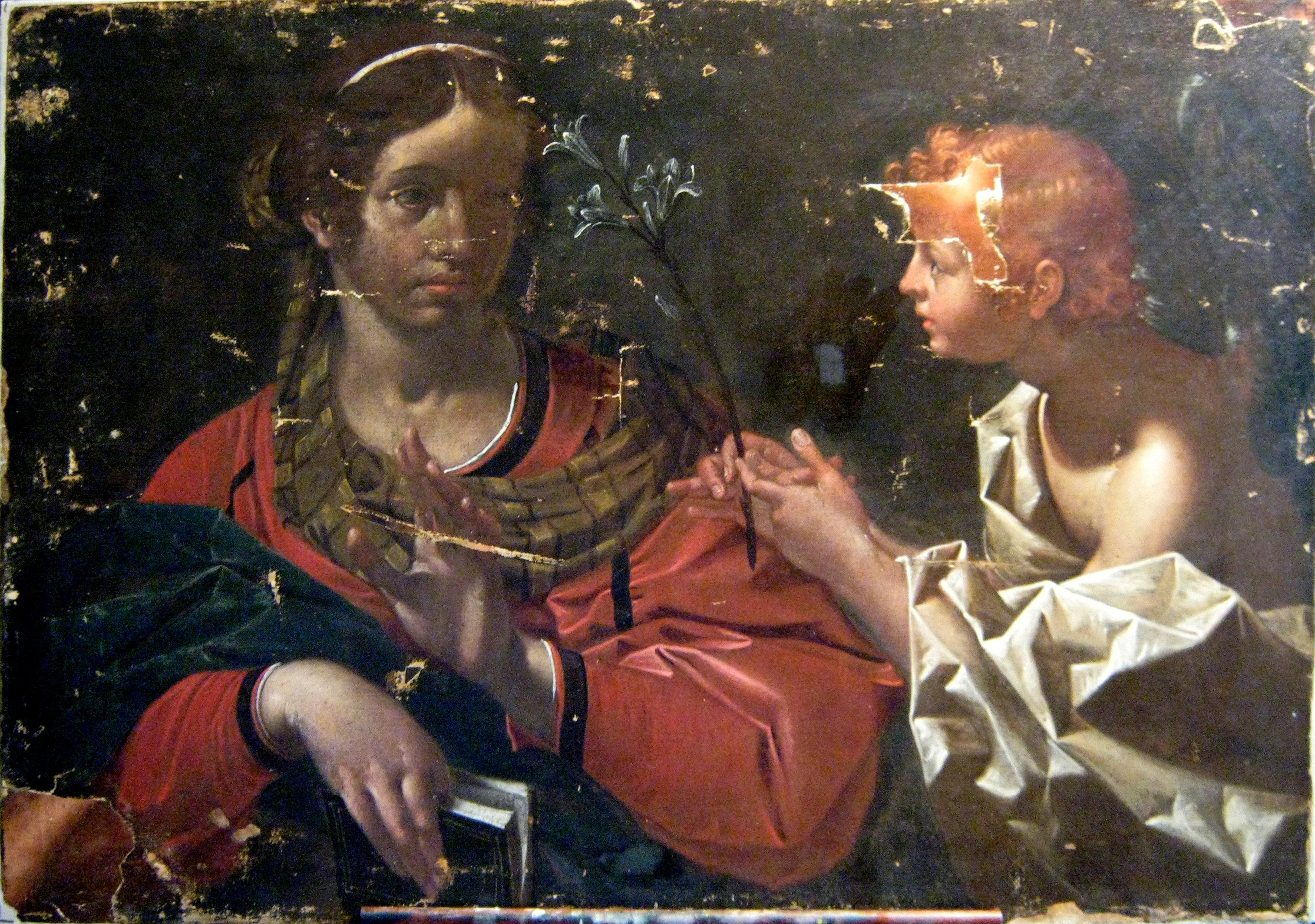
“Head of a Woman”
Paolo Veronese, (1528-1588), Italian | 32x24cm, oil on canvas
🔍 View Full Image
Sadly, this beautiful small painting is a cropped fragment of a larger composition. Sometimes, owners decide to cut up a painting into smaller, more manageable pieces... Read More
This might be the case here, perhaps for the reason that the painting had extensive damage, only a fraction of the painting was saved. Or, there are other pieces of it somewhere out there. We will never know. One can only imagine how magnificent the original must have been once!
In order to conserve and re-stretch this painting, it was lined to an additional canvas. Careful in-fill and in-painting with restoration colors brought back the original artist’s intent.
Before
After
↔
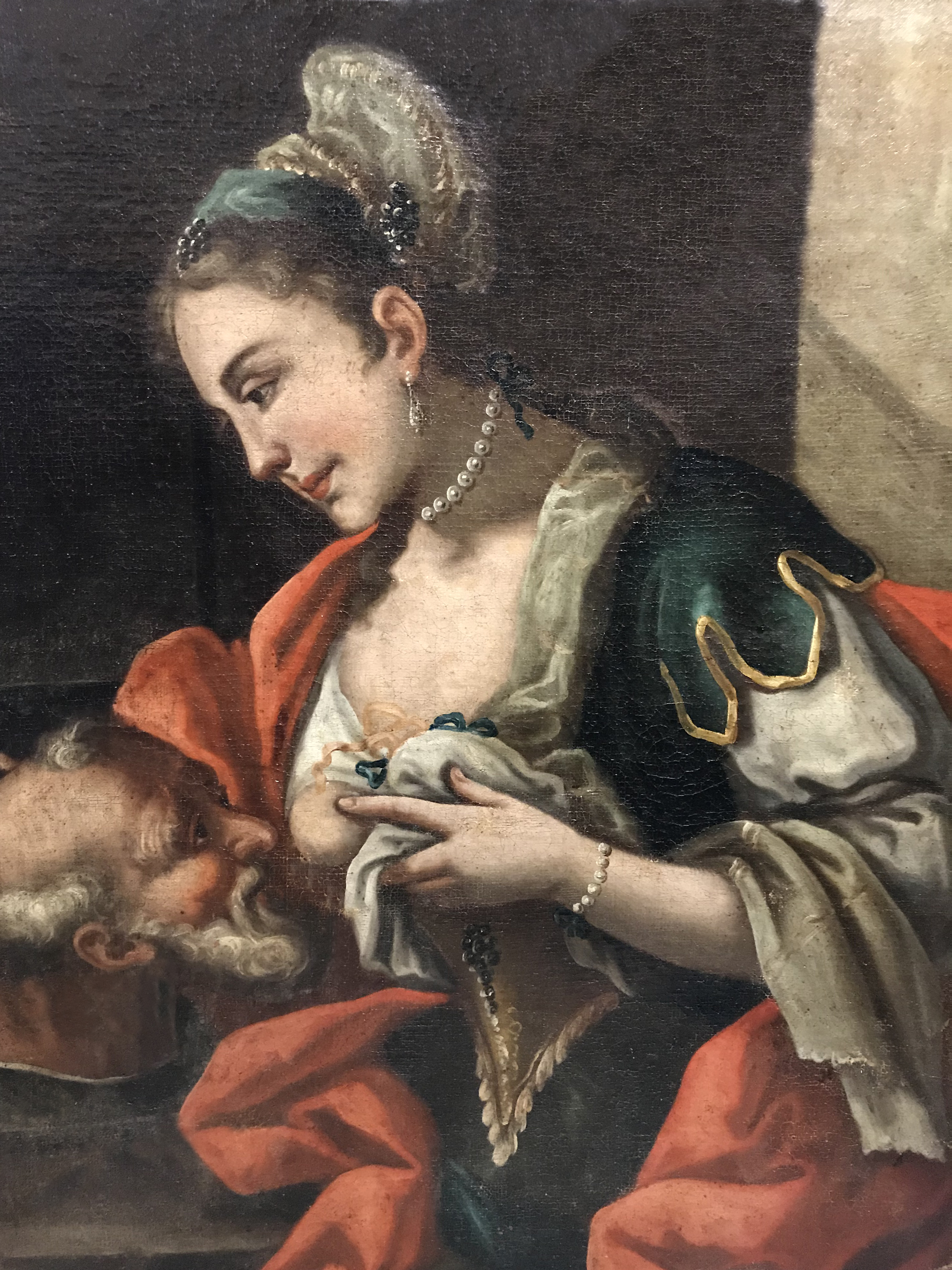
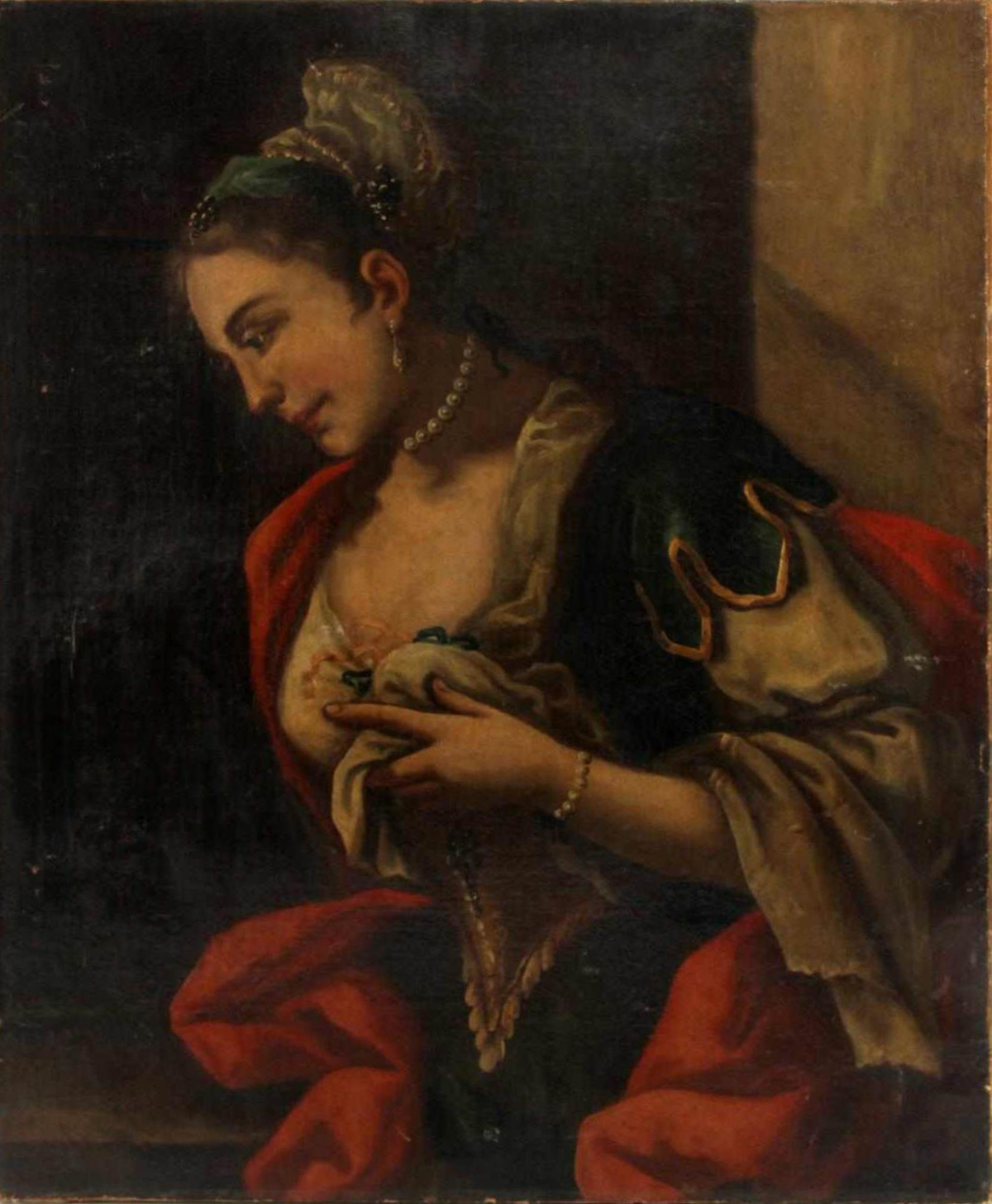
“Roman Charity”
Giuseppe Bonito, workshop (1707-1789) | Italian, 30” x 24” oil on canvas
🔍 View Full Image
The mythological story of Pero, secretly breastfeeding her imprisoned father Cimon was a popular subject in the 17th and 18th centuries, but it fell out of fashion in the subsequent, more conservative periods... Read More
That might have been the reason why the old man was eliminated. The result, however, was confusing. A leaning woman with a missing arm lovingly watching an empty ledge. The original topic might not be common, but it makes sense.
Very little was wrong with this Neapolitan painting after the removal of the old over-paint. A subject of such filial devotion feels strange to us today, but the vaults of museums are full of such strange paintings deemed unsuitable for modern audiences.
Before
After
↔
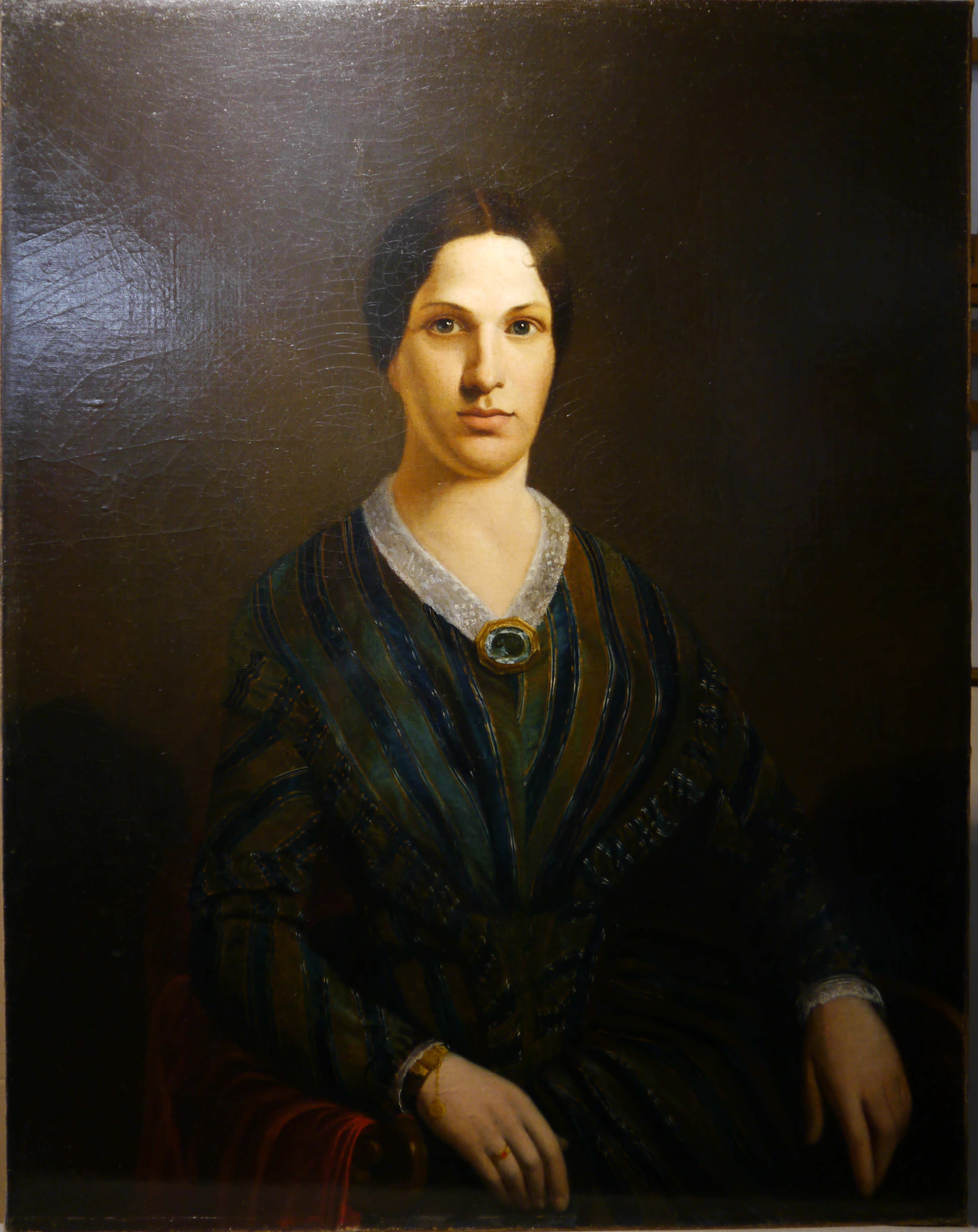
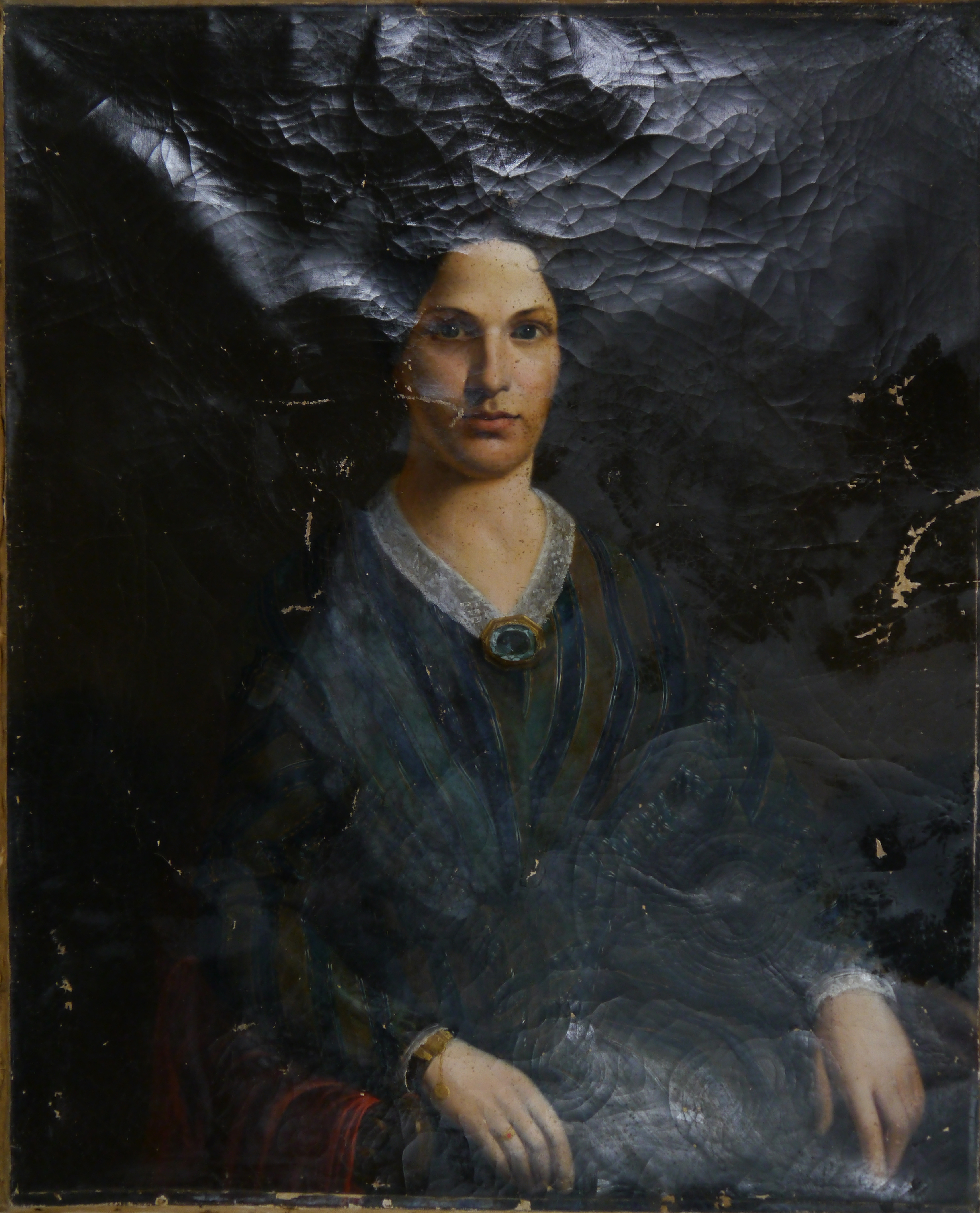
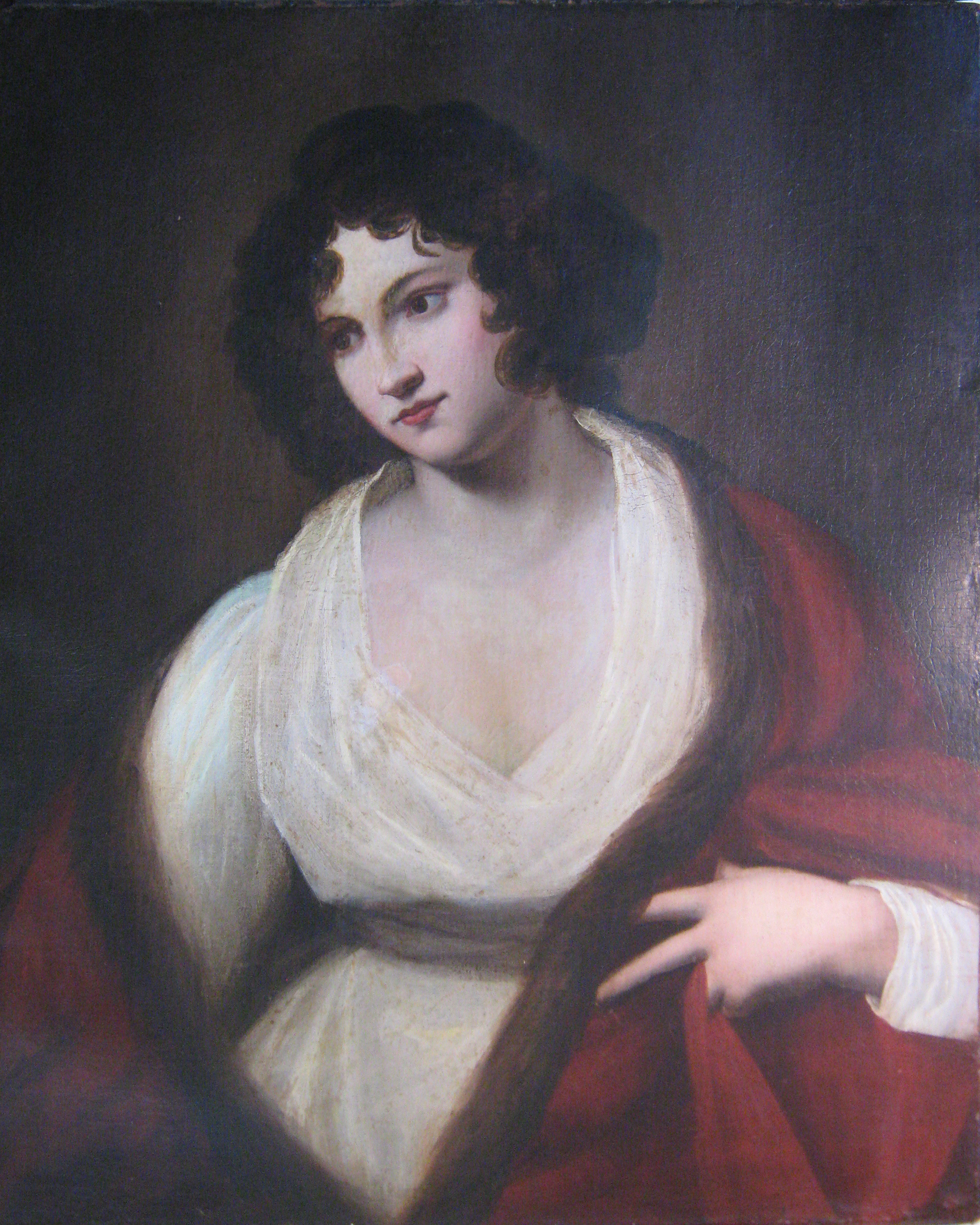
“Portrait of a Woman”
Unsigned, American, 19th century | 30” x 25”, oil on canvas
🔍 View Full Image
19th century ancestral portraits of successful Americans are quite common in any decent restoration practice. Women, especially young women, are highly collectable... Read More
They were usually painted as pairs; a husband and wife, turned towards each other, with a standard size of 30”x25”. They were usually housed in simple architectural gold-leafed frames.
Over time, many are passed on to family descendants, but the connection to the actual person depicted in the painting is lost. Some of these paintings end up in attics or basements, waiting for a good samaritan savior. Having such a direct, tangible connection to the American past is becoming rarer and rarer. Once restored, though, the visual impact of these portraits is undeniable.
Before
After
↔
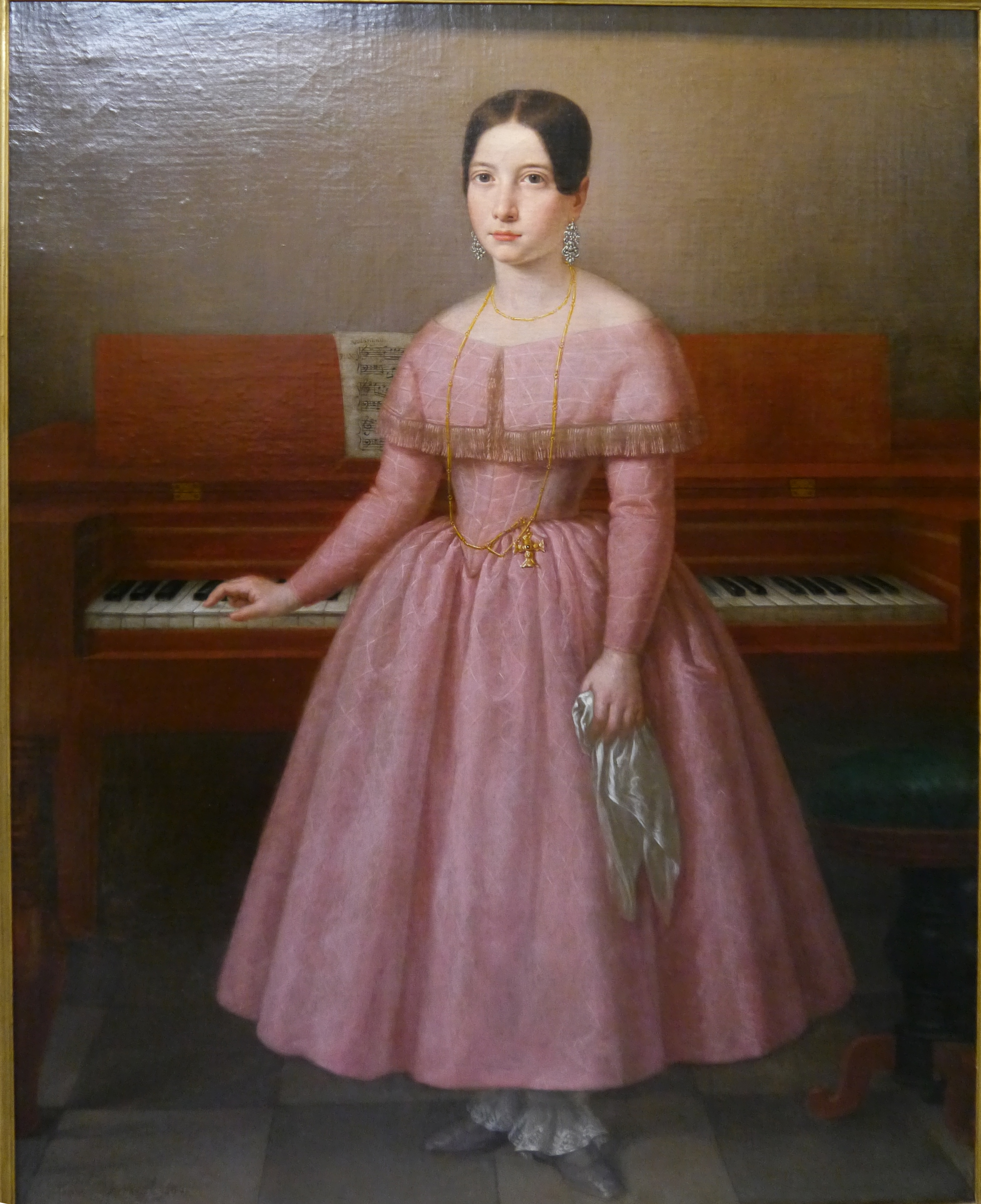
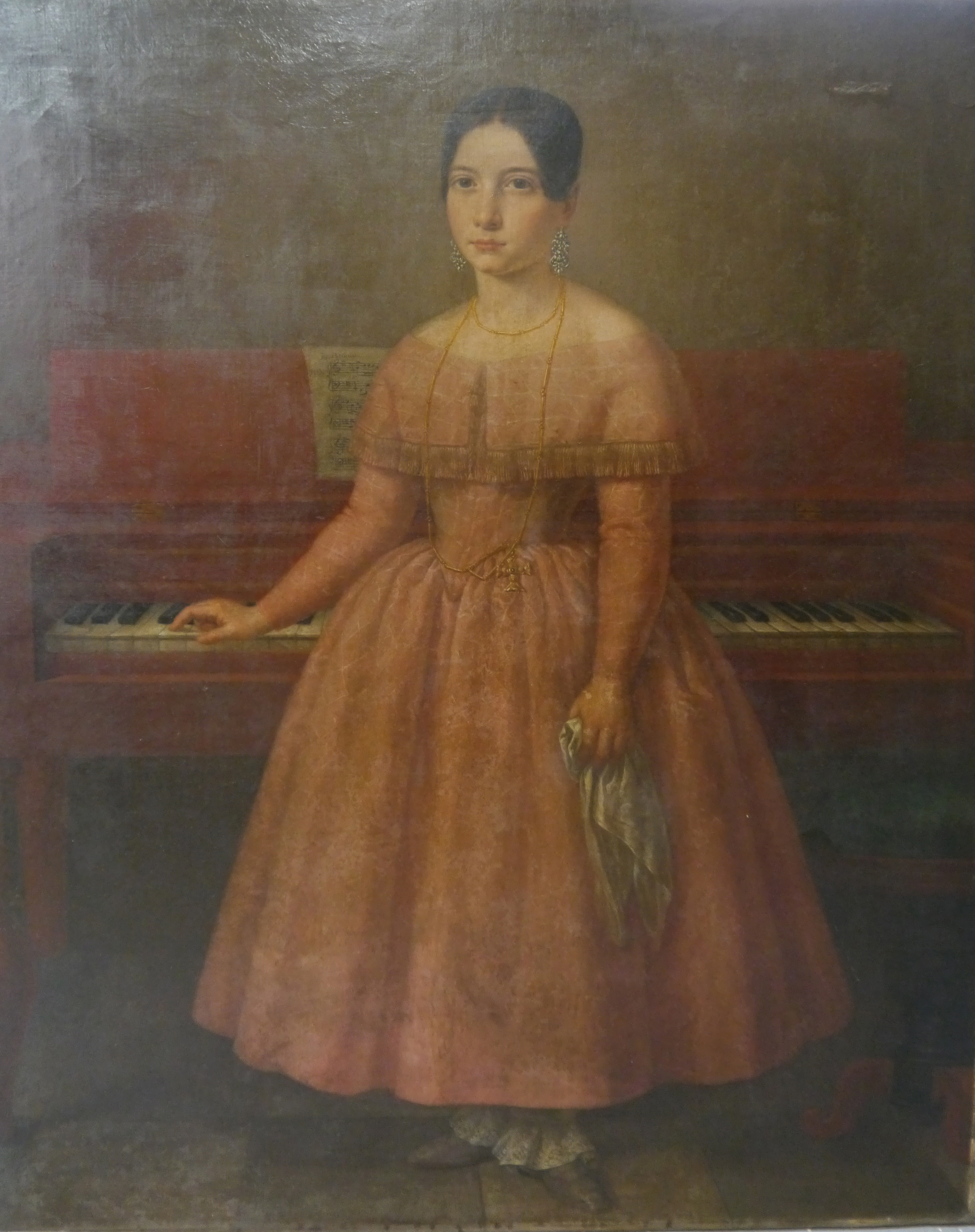
“Portrait of a Girl in Pink Dress”
19th century American | 50” x 34”, oil on canvas
🔍 View Full Image
A masterful example of 19th century portraiture; a staple in wealthier families before photography replaced them. This beautifully executed portrait of a young lady, who apparently was an accomplished pianist, was well taken care of... Read More
It was restored in the past, as most older paintings are, but over time dust and grime adhered to the surface, and the natural Damar varnish oxidized and yellowed. The deep yellow film altered the original colors and obscured details significantly. After cleaning, re-lining, and in-painting with modern methods, the young lady is as striking as she once was.
Before
After
↔
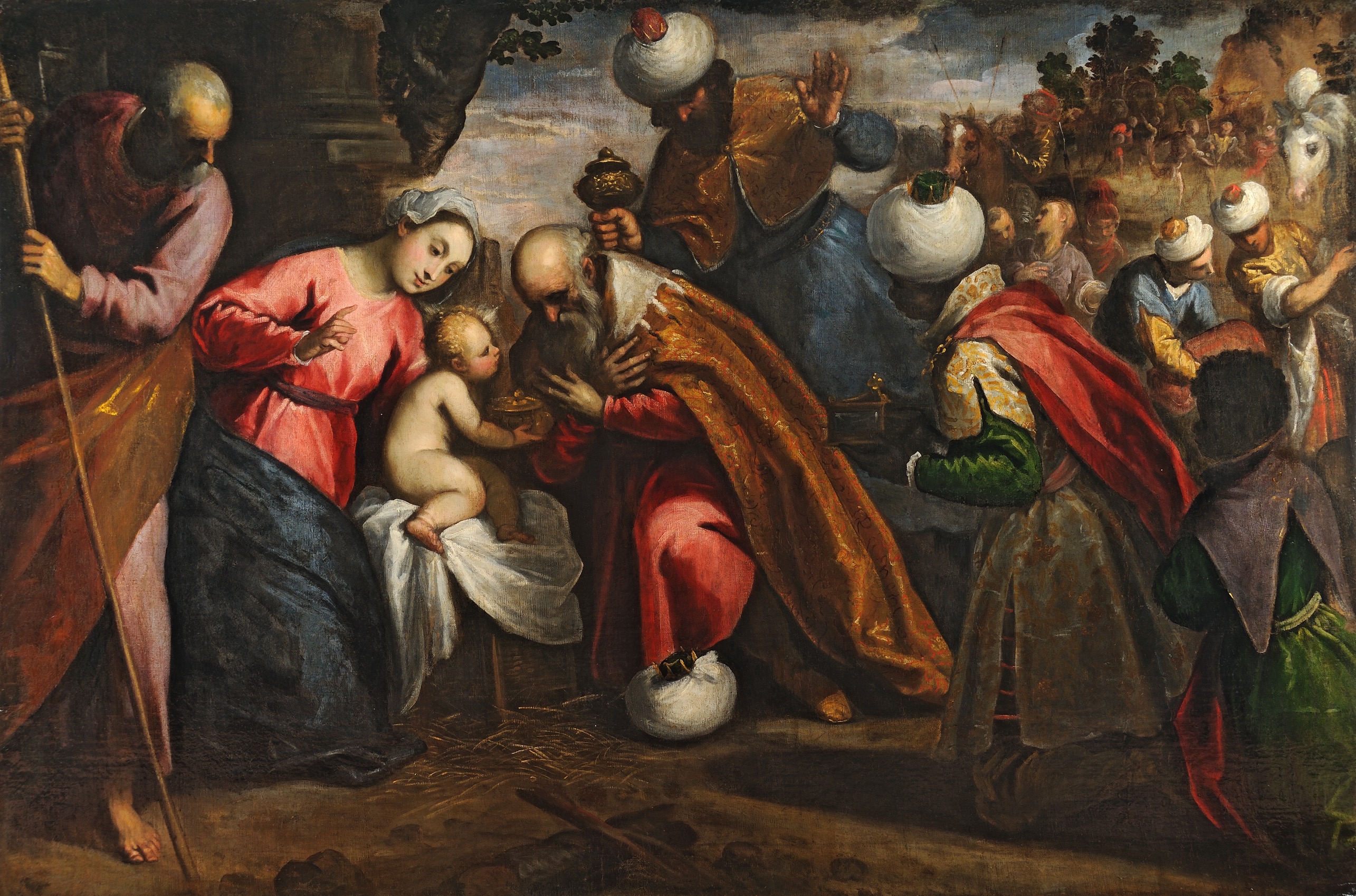
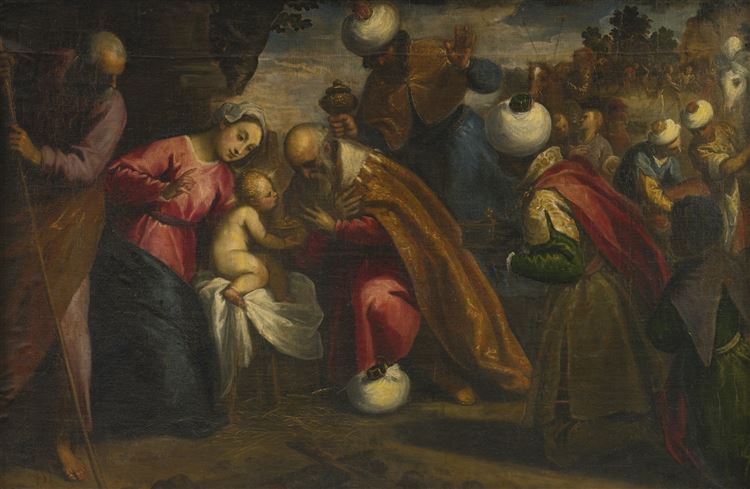
“Adoration of the Magi”
Jacobo Palma (1548-1628) | Venetian, 136 x 205cm, oil on canvas
🔍 View Full Image
The restoration work on this magnificent Old Master painting was a sheer joy. It is in relatively good shape for its age. No structural issues. No messy, complicated restoration... Read More
Old varnish and re-touchings were successfully removed without any problem. The painting needed very careful but measured in-painting (it is easy to over-restore Old Masters, due to abrasions and thinning of the pigments). On such a large piece, it took some time, but the results were very satisfying. The painting’s value appreciated multifold since the original purchase, and our careful restoration is a significant reason for its appeal.
Before
After
↔
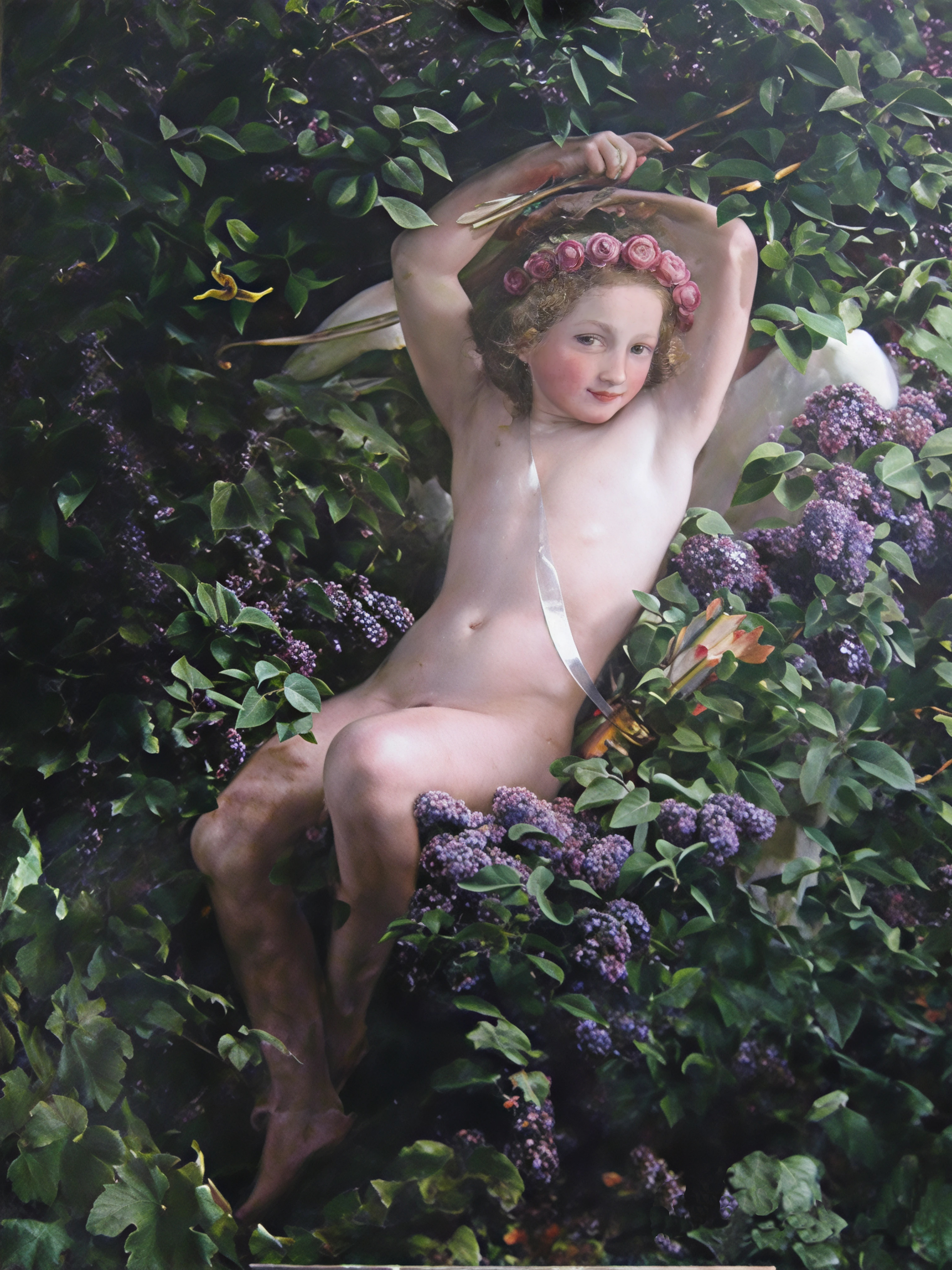
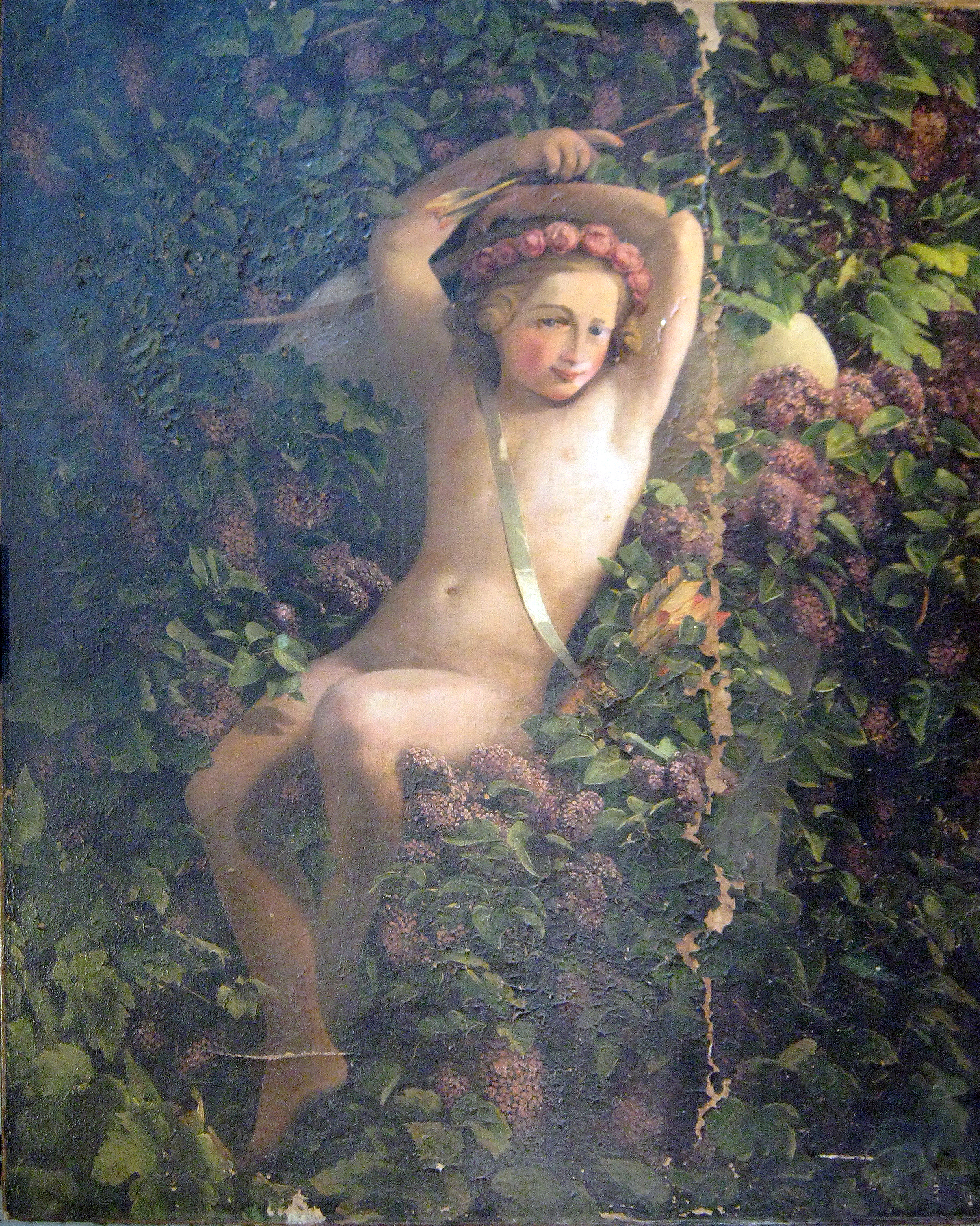
“Reclining Cupid”
Unsigned, French, 19th century | 41” x 34.5”, oil on canvas
🔍 View Full Image
If this painting were once signed, damage and previous restorative attempts have eliminated any trace of it. This is very unfortunate, but happens often. The French academic paintings of the Beaux-Arts era remained popular... Read More
...despite many efforts to denounce them as cliches, too polished, or stagnant and bourgeois. However, there is no denial of their beauty and ease of understanding.
For most of us, the beauty and undeniable talent of the painters take precedence over the need to experience art as a challenging struggle for innovation and desire for originality above anything else.
This painting was restored very poorly in the past. It suffered water damage that led to paint flaking and compromised the stability of the paint layer. The face was repainted, almost grotesquely so. Most likely by a very bad art “restorer”. Excessive over-paint is quite common in older painting, before the modern era introduced the profession of art conservator as a scientist.
Before
After
↔
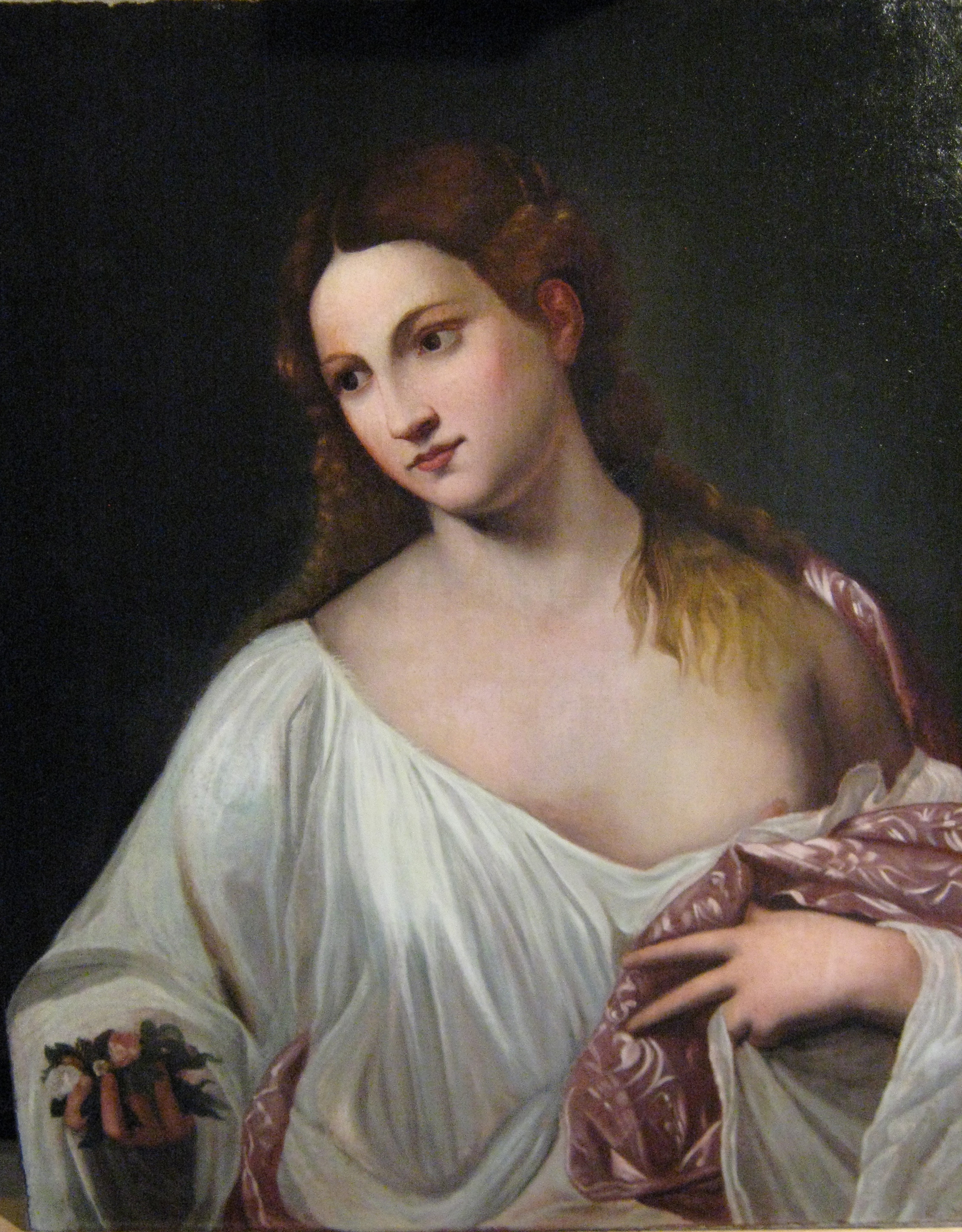
“Flora”
Workshop of Titian, 16th century | Italian, 30” x 24”, oil on canvas
🔍 View Full Image
Not even Titian himself would be able to recognize this painting after the “restorer/artist” was done with her. Flora, a symbol of fertility and plenty, was a popular subject of the late renaissance... Read More
Titian and his workshop produced copies of this painting to satisfy his patrons, as this was a fashionable image to display in bedroom chambers. However, in the conservative movements of the 19th century, such paintings were considered unsuitable and too risque. The solution was to make them “decent” and conforming to modern times. The alterations vary from just breasts covered, to a complete remodel as seen in this example. The original is unquestionably better, even if it needs to be moved from the living room into the bedroom.
Before
After
↔
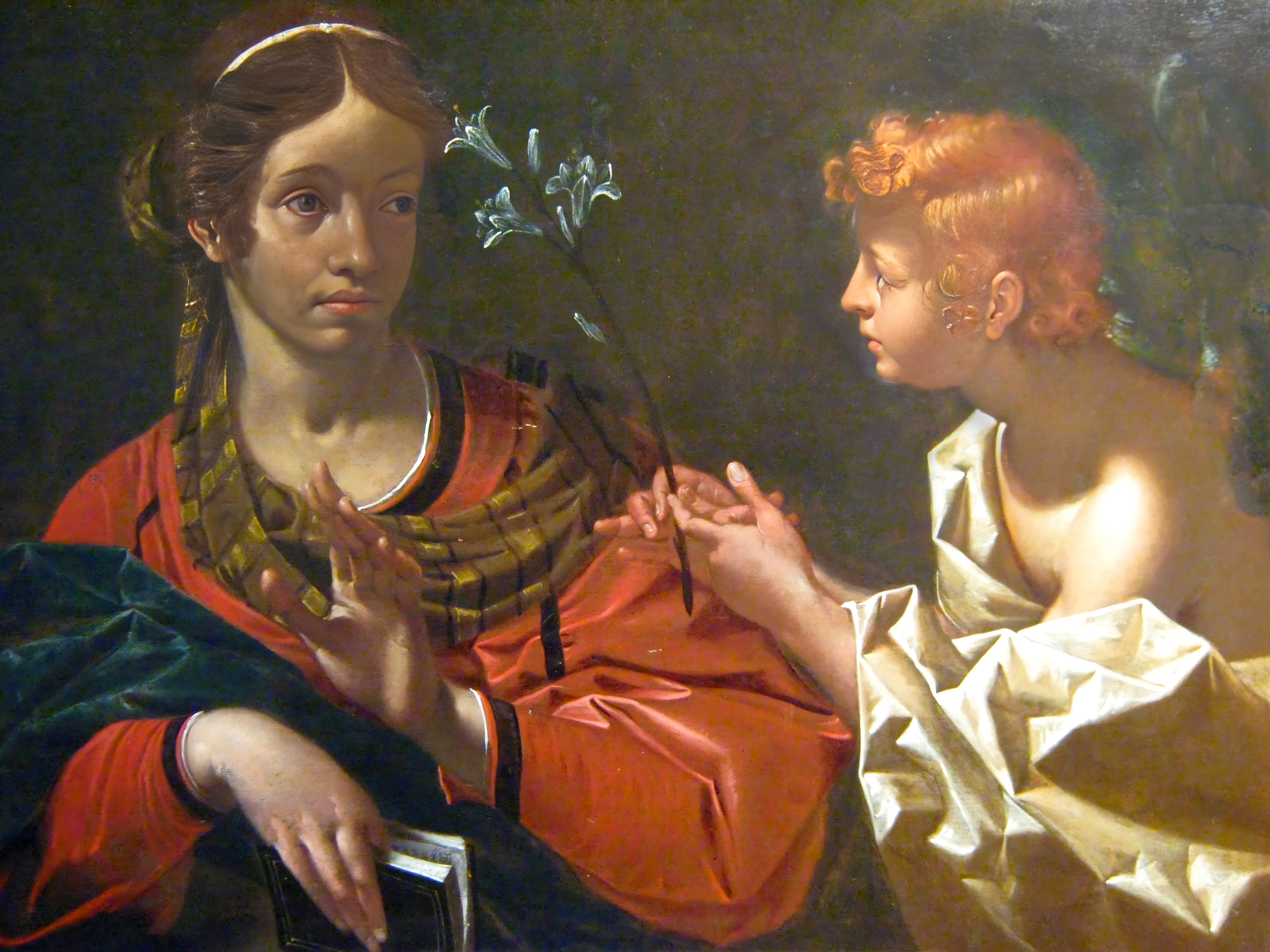
“Annunciation”
Cecco del Caravaggio, (1589-?) | Rome, 32.5” x 47.5”, oil on canvas
🔍 View Full Image
Francesco Boneri, nicknamed Cecco, was a pupil of Caravaggio. He is one of those gifted painters of the renaissance who was brought to light from dusty obscurity only relatively recently... Read More
The painting was damaged – not unexpected for a 400-year-old painted canvas. A larger piece of the angel’s head, the forehead, and hair were all missing. We restored this painting under the guidance of Italian experts in the Late Renaissance, which itself was a treat. We tried to reproduce the missing parts as close to the original as possible. It was not an easy feat, as every brush stroke was scrutinized for color and technique. The final result remains a feather in my hat to this day.
Before
After
↔
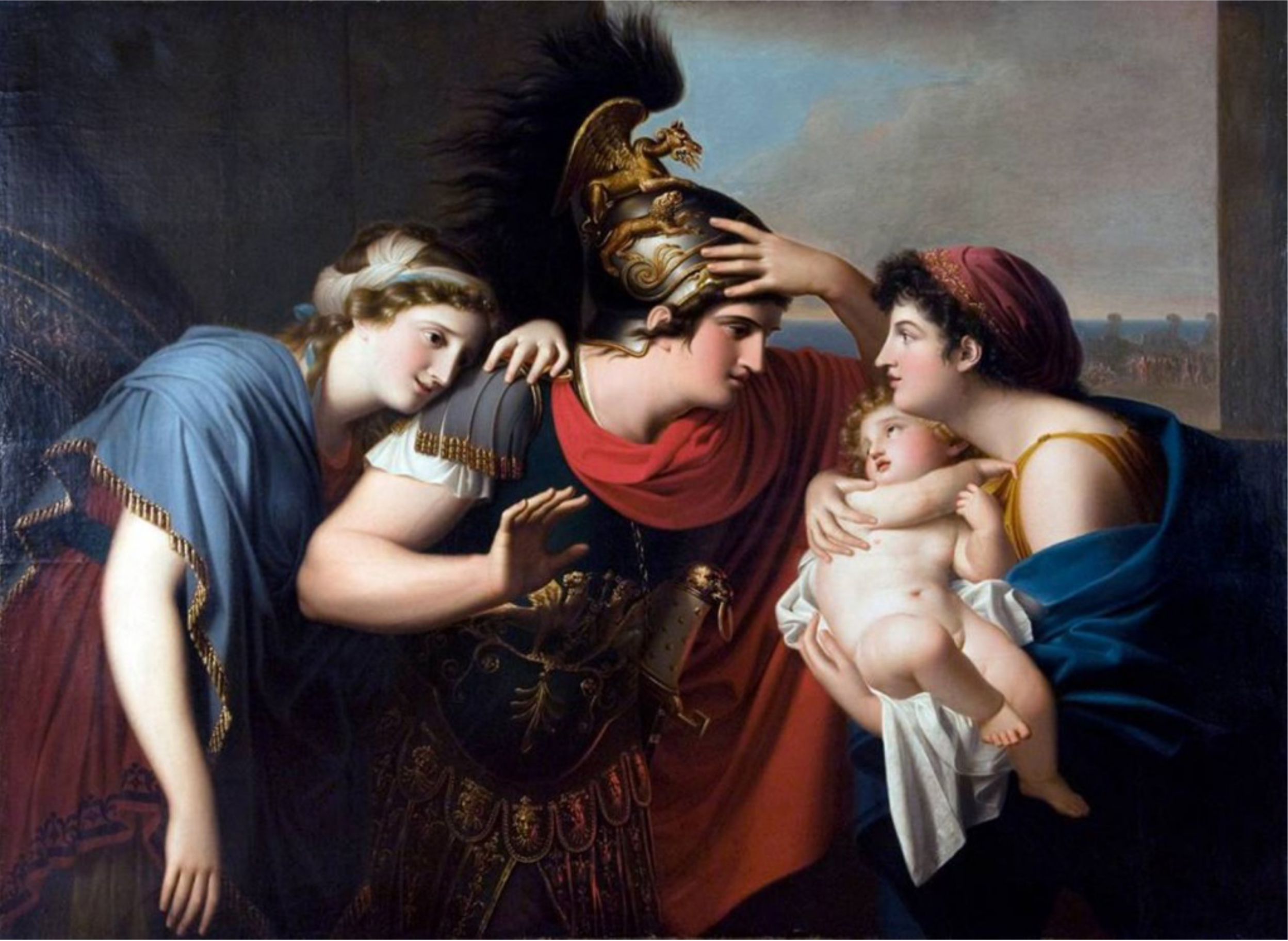
“Departure of Hector from Andromache”
Gaspare Landi, 1794 | Italian, 56” x 80”, oil on canvas
🔍 View Full Image
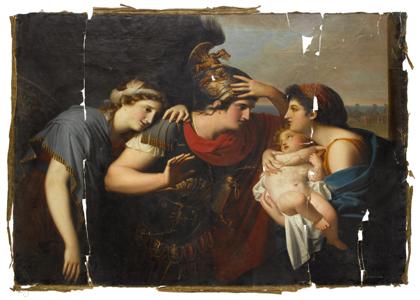
There are numerous neoclassical painters who found inspiration in Homer’s Iliad, but few created images as well-composed as Gaspare Landi. This large painting arrived in our studio in pieces, as a result of a very unfortunate and easily avoidable accident... Read More
It was a heartbreak to see the torn painting. It took Stephen, my business partner and I many months to painstakingly put it back together, like a very large puzzle. We were lucky that the artist used a very high quality and substantial canvas that broke off without much fraying or fuzz. Anyone looking at this painting today would have no idea how much work and effort went into restoring it to its former glory.
Before
After
↔
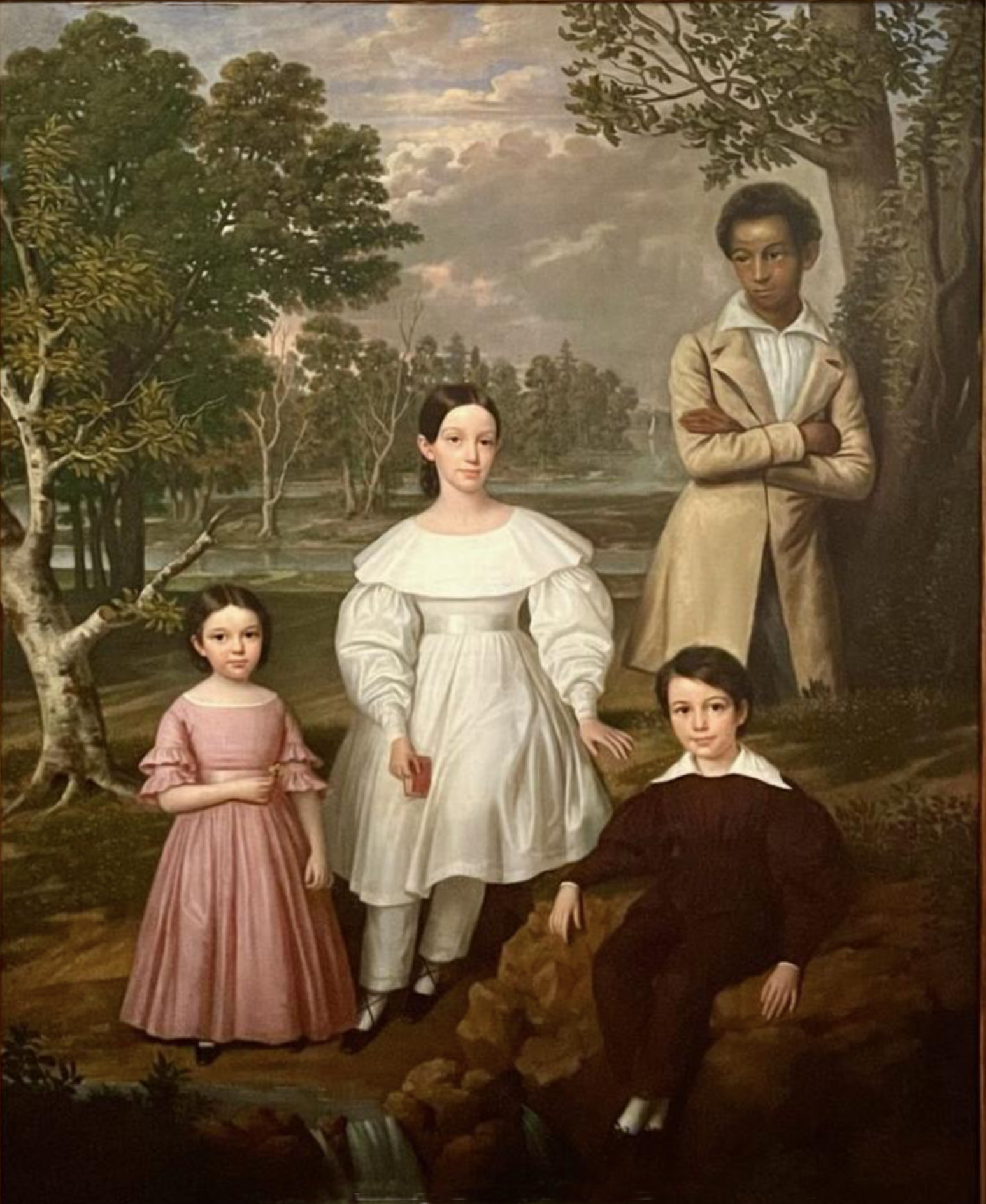
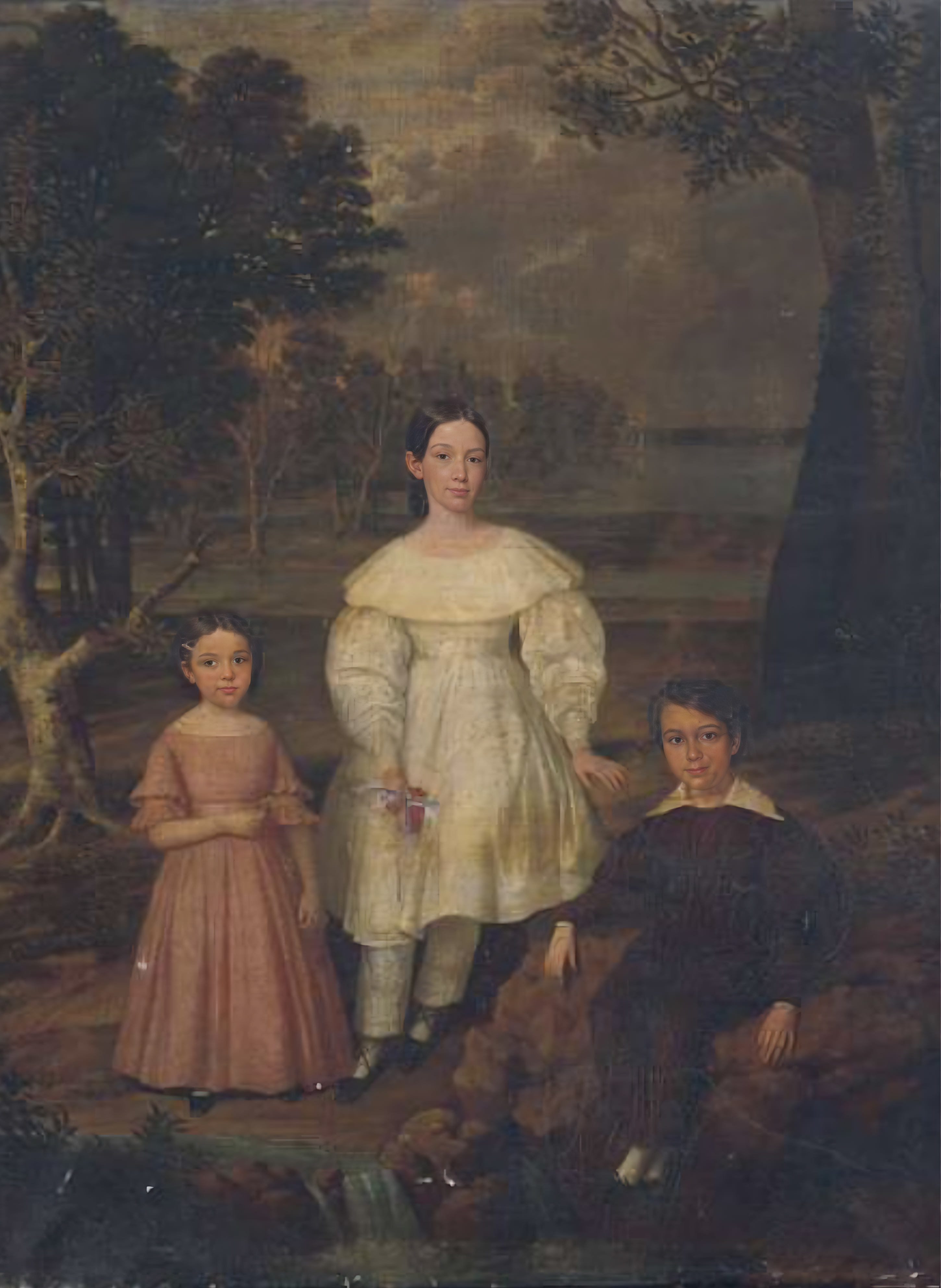
“The Frey Family”
Jaques Guillaume Amans, 1837 | Louisianna, 36” x 28”, oil on canvas
🔍 View Full Image
We received this full portrait painting of three children from a good friend and client. During surface cleaning, we discovered a large over-painted area next to the tree in the center of the piece... Read More
Surprisingly, a fourth child, a slave called Belizaire, was painstakingly uncovered. We do not know exactly when he was painted out, but our guess is in the 1950s, based on the solubility of the overpaint. His hair was abraded, almost erased, so was much of his face. The boy was not only painted out, he was sanded off to make the new paint adhere better. It was a very delicate reconstructive job to put him back together. Much later, in the changing light of our times, this painting made national news, became a symbol of the racial struggle, and is hanging in the MET today. The restoration on it is attributed to someone else, but it was originally done by us.
Reading about the history of the family, all three depicted children were dead within a few years of the completion of this painting. Only Belizaire survived into adulthood as a plantation cook.
Before
After
↔
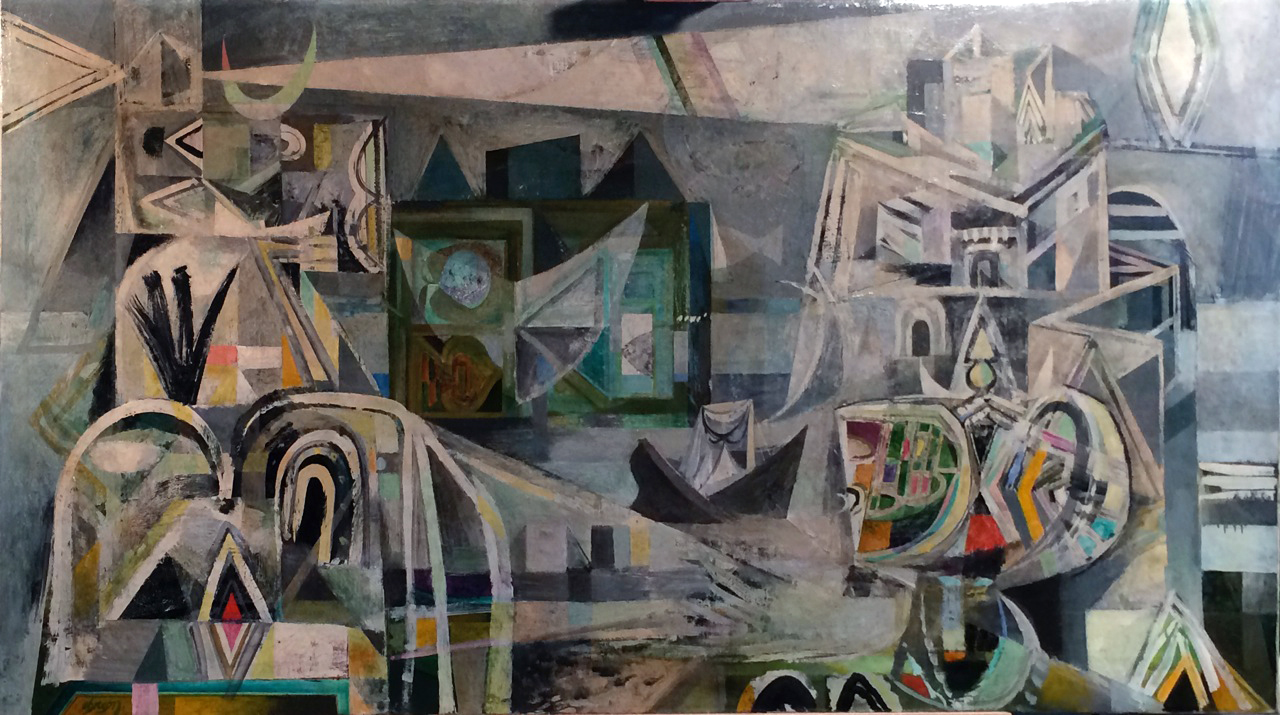
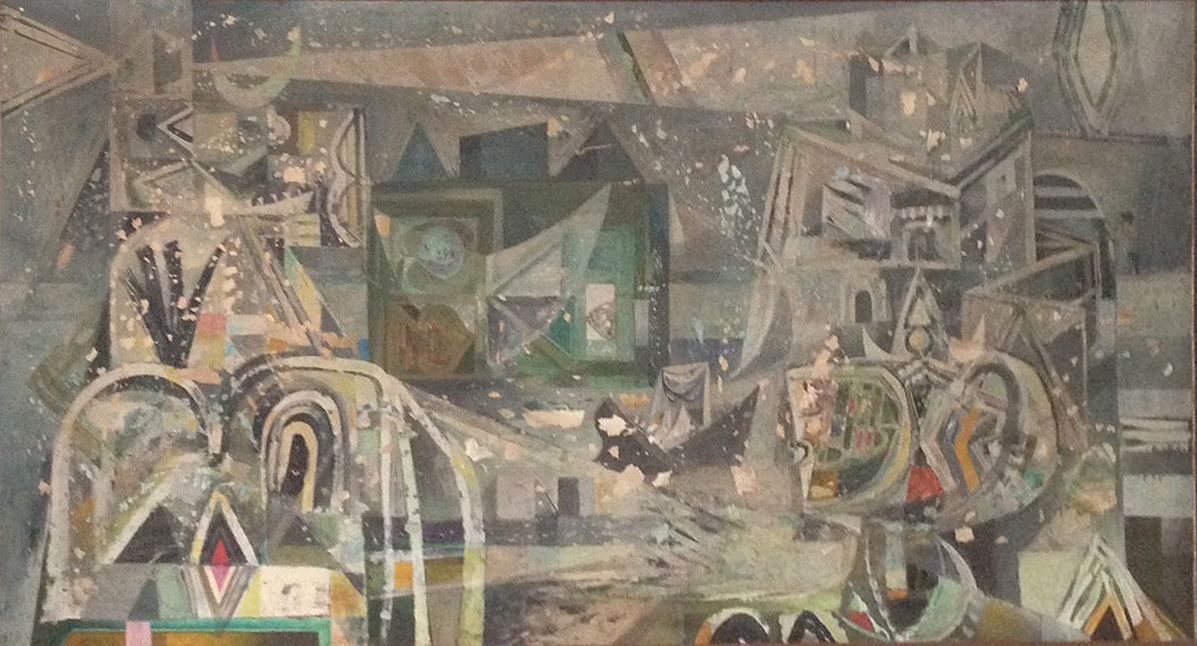
“En Gare”
Alehandro Obregon, 1945 | Colombian/French, 35.75” x 73”, oil on canvas
🔍 View Full Image
When I went to school, we were only taught how to restore Old Masters. Fine art restoration was all about old, traditional paintings. And in the first 20 years of my practice that’s all we worked on... Read More
Then, slowly, mid-century modernist paintings aged to the point of needing restoration and started coming into our practice. Obregon’s large “En Gare” was one of them. It provided a welcome change to our routine and introduced us not only to a new conservation process and technology, but also to different types of art dealers and collectors than we were used to.
As the pendulum of tastes and desires of collectors swayed from old traditional paintings to modern art, we needed to adjust our approach to include treating acrylic and combined media art, which is, in general, a lot more challenging than any Old Master.
Before
After
↔
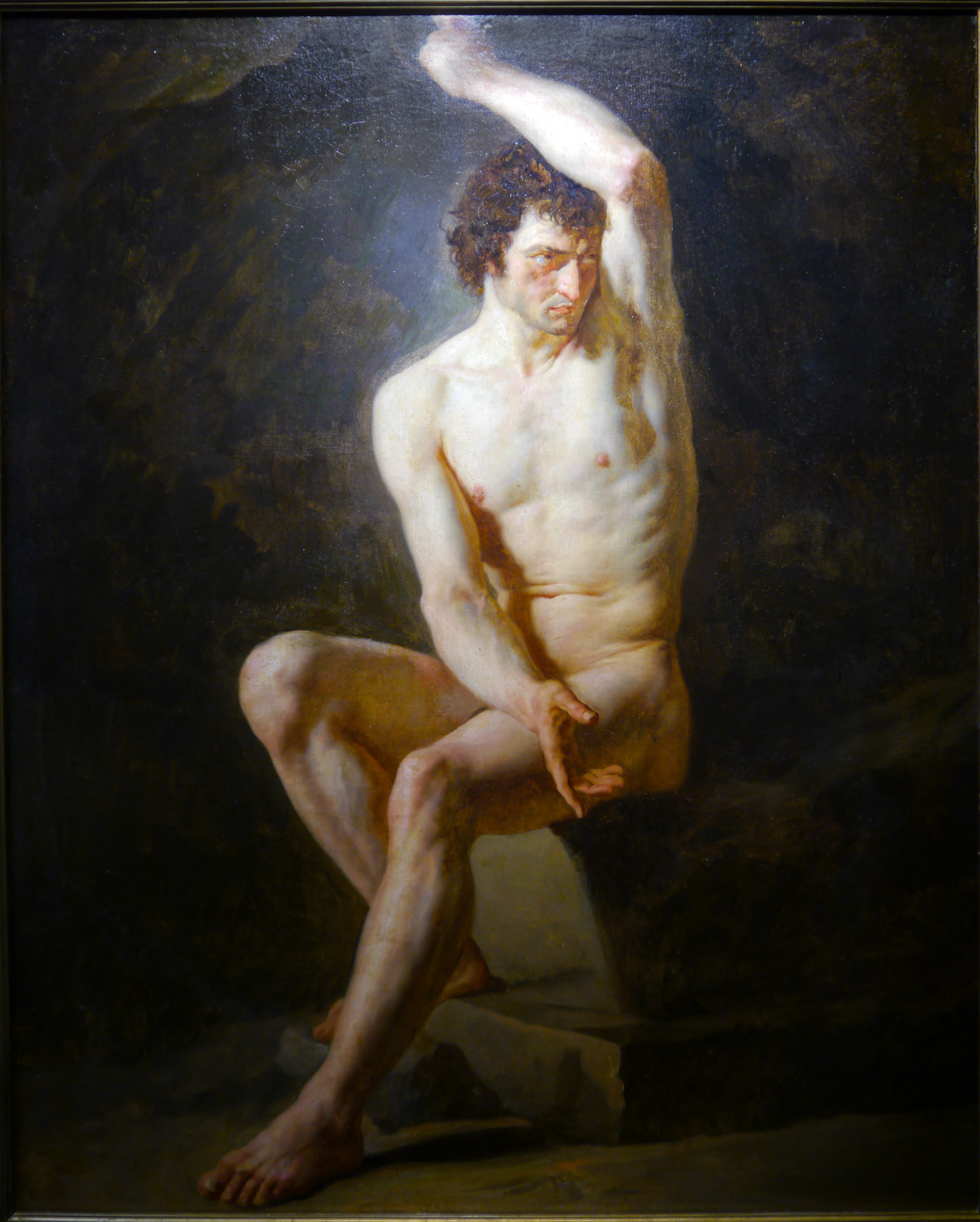
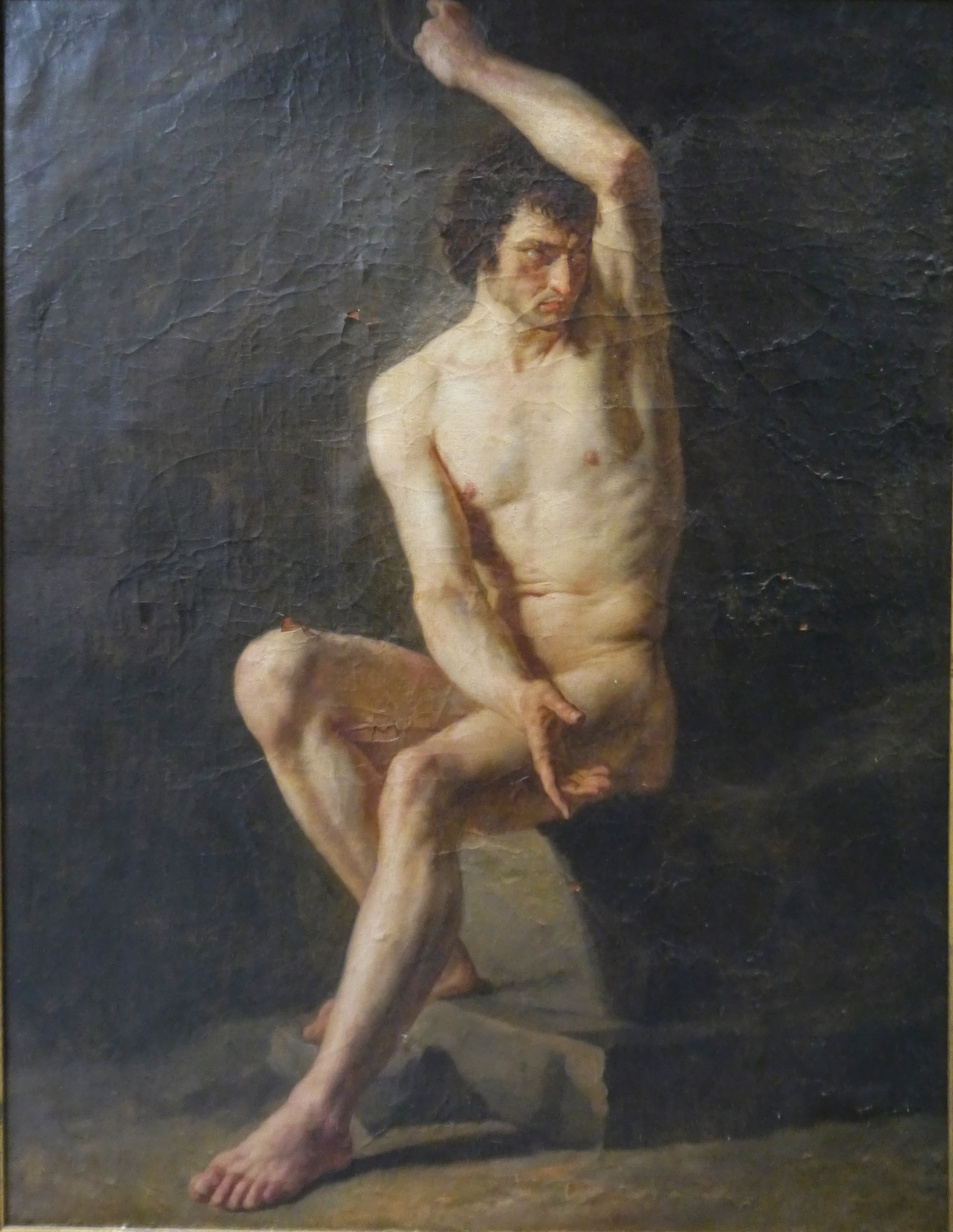
“Seated Male Nude”
French, 19th century | Oil on canvas, 80.8 x 64.5cm
🔍 View Full Image
Seeing male nudes as secular subjects in paintings is quite rare. This beautiful study of a man in contraposto is so masterfully executed, one cannot find a single flaw in it. Even the man’s expression is exquisitely 19th century: Full of annoyance and rebellion... Read More
The restoration included stabilization of the paint layer. This process treated the extensive craquelure and flaking caused by exposure to excess humidity. With careful in-painting and a coat of fresh varnish, this painting became a statement piece.
Before
After
↔
Studio Blog & News
March 1, 2026
Welcome to the new Studio Blog
We are excited to share our latest restoration projects, tips on maintaining fine art, and behind-the-scenes stories from our studio in Virginia.